Design for the Sake of Meaning, and Simplicity Through Thousands of Iterations
How would you define design culture? What might that concept include? Principles, values? The ones by which you choose a team? Rituals, practices? An approach to decision-making, a readiness to take responsibility?
I'd start from afar, then move on to project work.
For me, design and this whole culture isn't about craftsmanship in the sense of "design for design's sake." There are guys – artists and creators – who draw because they can't live without it. They create, they practice. I was in that flow too during my studies – we just drew, collaborated. But I underwent a kind of deformation: I started telling myself that it's really important to me that this something be needed by someone.
My last concept without a commercial purpose was about three years ago. I miss it, but I always ask myself: will I still have design if nobody needs it? It's a crisis moment. But what I find in craftsmanship is very important – I like that it can help someone.
I came across the book "Design Code" (the author is a philologist, Lola G. N.). I like her interpretation: design is just a liquid that we can adapt to absolutely any request. That's more universal than forcing it into frames. It doesn't matter where you do it – however you want to define the function, that's how it should be defined.
There's room here. Some people don't do design if it's not commercial. Some draw shots and don't post them, just because it's cool, something worked out, they want to share.
In terms of shots and just enjoyment, it's grown into an R&D process. You can post a shot to a channel, but there's no painstaking process: six months of concept work for one case. That's a shift of focus.
Good thought. You don't overrate what you do, but you speak honestly about all the benefits design gives us.
But it's important to me not to wrap craftsmanship only in commerce. It's more of a ritual: what you create. I'm talking about the final, complete benefit that I can give someone with my work.
– Sergey Breus
How did you come into design? Which moments influenced how you see the field?
It all started with a depressive phase. I only started doing design in my third year, at the beginning of the pandemic. Before that I'd danced for a very long time – about ten years. It gave me a foundation: an understanding of music, culture, fashion. But there was strong stagnation: I'd practiced for a long time, and there was no growth.
At university I didn't know what I wanted to do. Then I came to a free offline design intensive. They told us what UX Design is. At the time that was as adequate as it got. Then the pandemic began, the studio rolled out a three-day intensive, and I got seriously hooked. I remember I didn't leave Figma for a week because it was so interesting. I tossed out sketches, screens. It was very trendy to throw together a first screen of a website.
I remember euphoric memories: I gave it so much time that I didn't know what day of the week it was. I had vacation, the pandemic, nowhere to go, they'd graded everything remotely for us. I went through the training very inspired.
When I was finishing the course, I already had work vibes. I was immediately set on the vibe of working in an office. My first job was an office, I went every day for nine months by ten in the morning. I even came in at seven or eight to work a couple of hours before the office, watch lectures.
Then serious projects came: Pragmatica → F61 → in parallel IMEQ Club (Sasha Laguta, Sergey Gurov) → ONI.
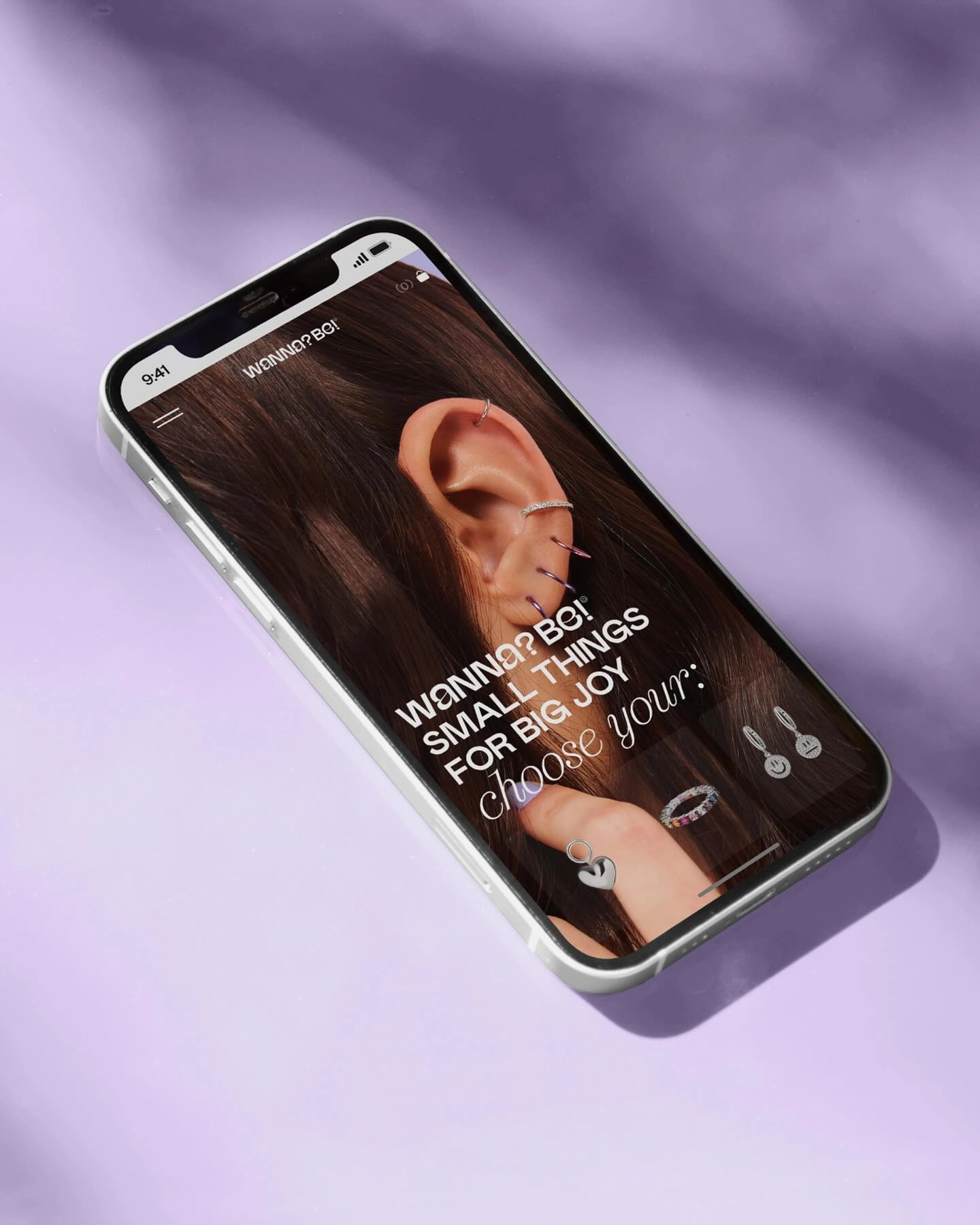
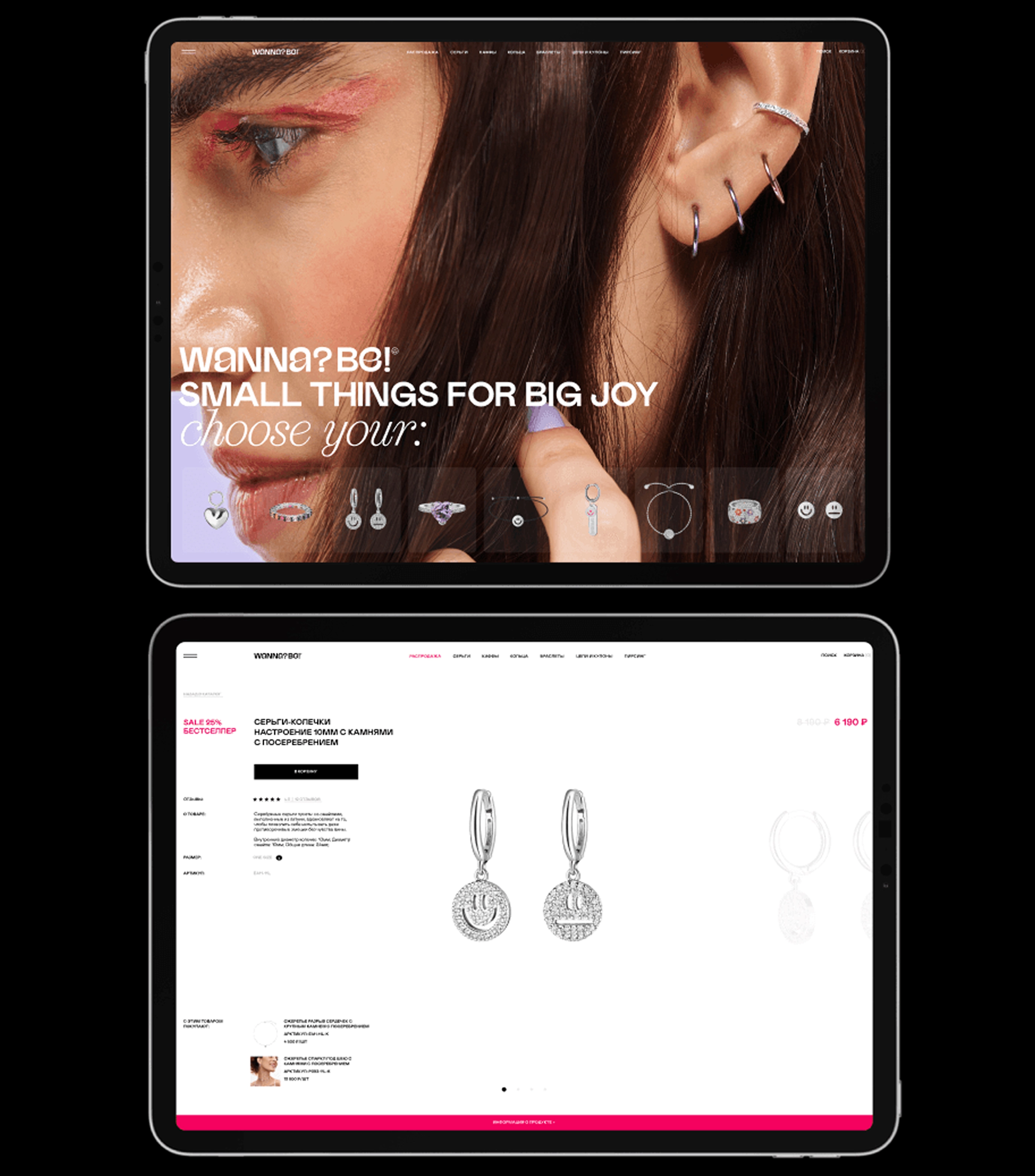
The key point was moving to F61. A small four-person agency: two art directors and one designer – Mamarik Terilova, Sveta Lomakina, Sergey Polukhin. Then a manager came – so five of us.
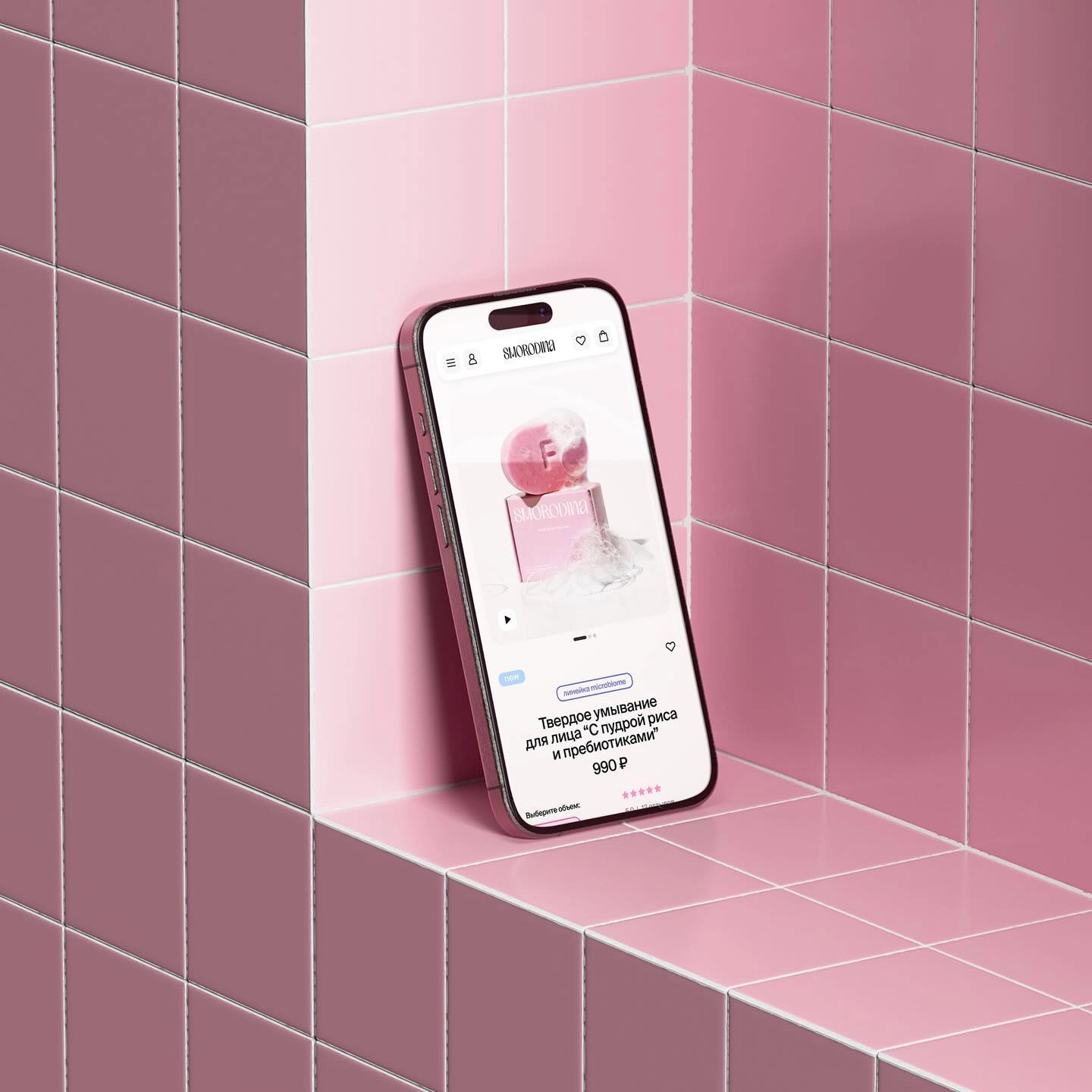
The agency took exclusively fashion boutique projects. The brightest projects were done by the studio Tattoo Mood – Monochrome, which I didn't catch. I came when they were making Anaïs, took part in Terzof, we made it together with Morrodin.
Those projects influenced me because they made fucking great commercial work that made it to production. All the brands I named exist now. You had to capture that feeling. The art directors are insanely distinctive, they don't enjoy what everyone else enjoys.
For a while it was very hard for me to work, because we couldn't find common ground. Then we found it, and the work went up. I immersed myself in a bigger design process. Before, I lived in the nook of web design, and then I got to know identity, the creative component, metaphor, the search process. I took part in shoots, campaigns, and understood how much all these elements shape a brand's vision.
The main influence is Sergey Polukhin, my first art director. He's involved in how Monochrome, Terzof, Tumut look. Insanely talented. Our relationship began with light abuse, I say that as a joke. He had to explain to a guy who came in thinking he knew everything why he was drawing bullshit. Back then I didn't understand him and thought he was abusing me. Now I'm insanely grateful for all the knowledge he put into me.
We worked most of the time – 80%. I had design before him and design now. It's like two sides of a coin. On one hand, it strongly affected my growth – that's great. But on the other, I still took a piece of him into myself. I try not to abuse anyone – that's a joke.
Which literature and public talks influenced you?
First – the film "Helvetica." When I watched it in 360p on VK, it made a total impression. I watched it when I was anxious and didn't know where to grow. I remember watching three times. Then in Saint Petersburg I went to the cafe "Lyudi Kofe," where they decided to show "Helvetica" and feed everyone a Swiss dish, a croissant with cheese and jam. I sat, ate and watched "Helvetica" on a projector. It was cool.
I remember thinking: now I'll draw everything in Helvetica. I opened it – Cyrillic. That's cruel to us, but Cyrillic really is its own world.
Then I took Sergey Gurov's intensive "Composition and Design" at Bang-Bang Education. What impressed me wasn't so much talking to Sergey as the propaedeutic course. Before it began, he sent lectures to study. They were written based on Emil Ruder's book "Typography." Sergey explained the basic principles through his own experience.
It really turned me upside down back then: open and closed composition, dynamic balance, the concept of mass design. Some physical, kinetic properties – how elements attract each other or, on the contrary, hang firmly.
After the course I went and bought Emil Ruder's "Typography" in the original. I read it fully, took it in. When you read it yourself after a course – it's powerful.
Which work practices and rituals support and recharge you?
First, I can collect moodboards for weeks. Images mean a lot to me. I have a fear of uncertainty – a very strong one. When I don't understand how to draw a project, I won't start it until I've at least put it together for myself in pictures.
It's a very important practice. Even when I work alone, I work with a team; and with a team all the more. How am I supposed to explain to a designer what we'll draw if our minds aren't synchronized?
The ability to find solutions is not a direct reference, it's an approach from strategy, from semiotics. We form a space, we have to immerse ourselves in it, learn to live in it, understand what we're assembling, how we work with typography. It helps a lot when working with brand designers: they made the identity, and I draw the web. I have to decode their identity: do I understand it correctly and how do I refract it? Identity isn't a finished story, it's something ongoing, it has to live on other media. References are number one for what I need.
Second, I'm fixated on answers. I asked ChatGPT what my problems are, and it said: you need to vibe, relax, draw a bit. But it's really important to me to constantly find answers to why we're doing this. Is it function? A business decision? A metaphor?
I try to connect all my concepts with some thread. Even if it seems insignificant – I need to find an explanation. I can't show a design and say "it's cool," except when I'm showing an R&D process. But if I'm talking about inspiration and ritual – I have to be able to explain it at least roughly.
I love simplicity. I have a quirk about complicated solutions: you look and think how many hours he ground away at it, a multi-step maneuver. But what's cool is when you find a solution, when the sheet is empty and everything is clean. Inside you feel that this simplicity is so complex that you had to arrive at it through thousands of iterations. That's the kind of simplicity I always want to arrive at.
Personal rituals: I hate getting up late. For the last year and a half to two years I've been getting up at six or seven in the morning every day. Except weekends, I don't like getting up late. My peak of activity is before lunch, until three or four. After that the routine begins. All the conceptual, strong things I do early in the morning. Especially if it's freelance – I do concepts before work. I'll throw something together, sit, think, then start the main work.
Do you have a universal recipe for a project? Vision, benefit, metrics, business task?
My main priority is for it to be fucking great. So that you look and think: damn, that son of a bitch. That doesn't work as a recipe, because I roughly understand how to build an identity on the cleanest moves so it's trendy, pretty. That can be done. But making something truly solid is hard.
There's an inner critic that always butts in: that's not it, that's not it. The problem is that there's something you don't know, and until you feel it, it's hard to explain.
Everything must have an answer. When I say "everything must have an answer" – that's a very capacious explanation. There's a concept. The concept must answer the questions: why are we doing this? For what? For whom? Where should it develop? There's no right answer – there's an adequate reading and understanding from the standpoint of digging into meaning.
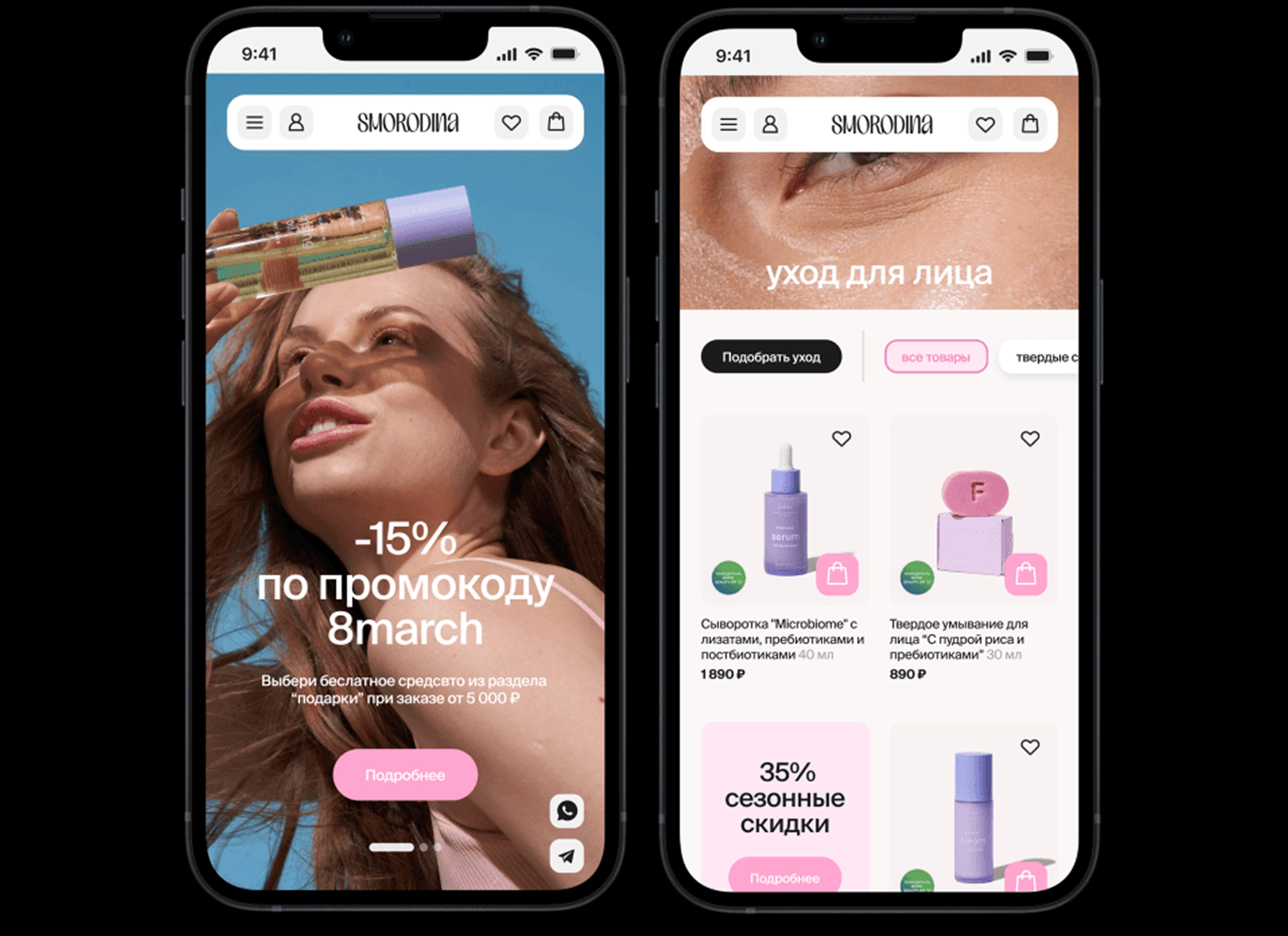
In my latest projects I start with strategy from branding. You need to understand where the brand is heading at all. If we can answer what our concept is and why – the visuals are very easy to build.
It's not that we need to express the concept through design. We just have to amplify it. Like on the web: there's a business task. It's strange to make something that should generate profit and say it's tuned to metrics. Until we try, we won't know. If we work for business – we try to make everything work.
In a layout, it's very hard not to find a solution that solves the task. But finding a solution that reflects the strategy and the meanings the brand forms through that specific task is the hardest part. Finding exactly the solution that adds up to your concept, to your direction. The most important thing is that it doesn't just solve the task but amplifies, underlines the emotional components. So that the user, client, consumer feels some set of emotions from that solution.
What is good design? Can it be defined?
As honestly as possible: it's design that was given a function and a shell, goes through it and fulfills it. When design evokes emotion and does what it was created for, it's good design.
What can be called good or bad in a concept is hard, because design is felt. Recently I saw the work of a designer I know who does design behind the scenes of shows. You can really see it. It's a little scary, because we live in a world of artificial content.
We live in artificially generated content. Even if you look at bloggers and social media, we live in content that we can't relate to. Because it costs a huge amount of time: morning routines, walks that are all staged. There's no spontaneous content.
And then AI content joins in. It's terribly harsh. The scariest part is when people who've been in the profession a long time teach this and consider it normal. They themselves use things that look mayonnaise-y, unrealistic, and create a layer of content that's disgusting.
Content in design is the hardest thing. That's why there are shoots, 3D artists, CGI artists. All of that needs to be valued. The AI story can speed up the process a lot, give a quick result. But even with it you have to sit and dig to the very end. It scares me that AI can produce a large amount of content that we start to see in the real world. That's the scary part.
If we talk about AI as a tool, it's a really cool thing that can simplify learning, travel and research.
I'll admit – I love content where multiverses are crossed. For example, "Star Wars" in the style of Hayao Miyazaki. It's pop, but it's fun – an element of inspiration and enjoyment. It's great content. But there's a very thin line between that and the garbage that clogs up the internet. For me that's garbage. I don't want it on the internet, I don't want to look at it.