An antidisciplinary approach, the world of post-design, and craft in the age of AI
How do you understand "design culture"? What does that notion include for you?
We have a pile of memes that we constantly come up with and that become internal brands. That's exactly the answer to the question about culture. We collected them in the form of copywriting: we talk about the same things all the time and use the same methods. These memes can be considered values, or pillars on which our practice stands. But it's an organic thing that changes as we move – as we develop as individuals, as we develop the business.
Essentially, design can't be consolidated. We live in a world of post-design, where meaning matters more than how something looks. The culture and principles you live by are about that too. We can describe them in different ways. But it seems we always say that at the head of everything is a certain point of metaphor, which vibrates through the whole team and stands against everything around.
The first is the antidisciplinary approach. Not multidisciplinary, but antidisciplinary, because we like that countertone, the negation built into it. To come up with something cool today, you need to negate the discipline you came from. To come up with something within a digital product, you need to negate all the other digital products, the standard solutions on the market. For a brand you need to think the opposite way, pick the other extreme. You need to pull yourself out of the discipline, sometimes forcibly, by taking a few steps back.
Our words are proven month after month by the spread of artificial intelligence: how fast it's happening, and how impossible it actually is to replace human creativity, creative work, and authenticity. But how quickly craft can be replaced. Unfortunately, that's true. And it will only develop faster from here. The main thing isn't so much how it looks or how it works, but the meanings built into it, the depth and authenticity of the people who made it.
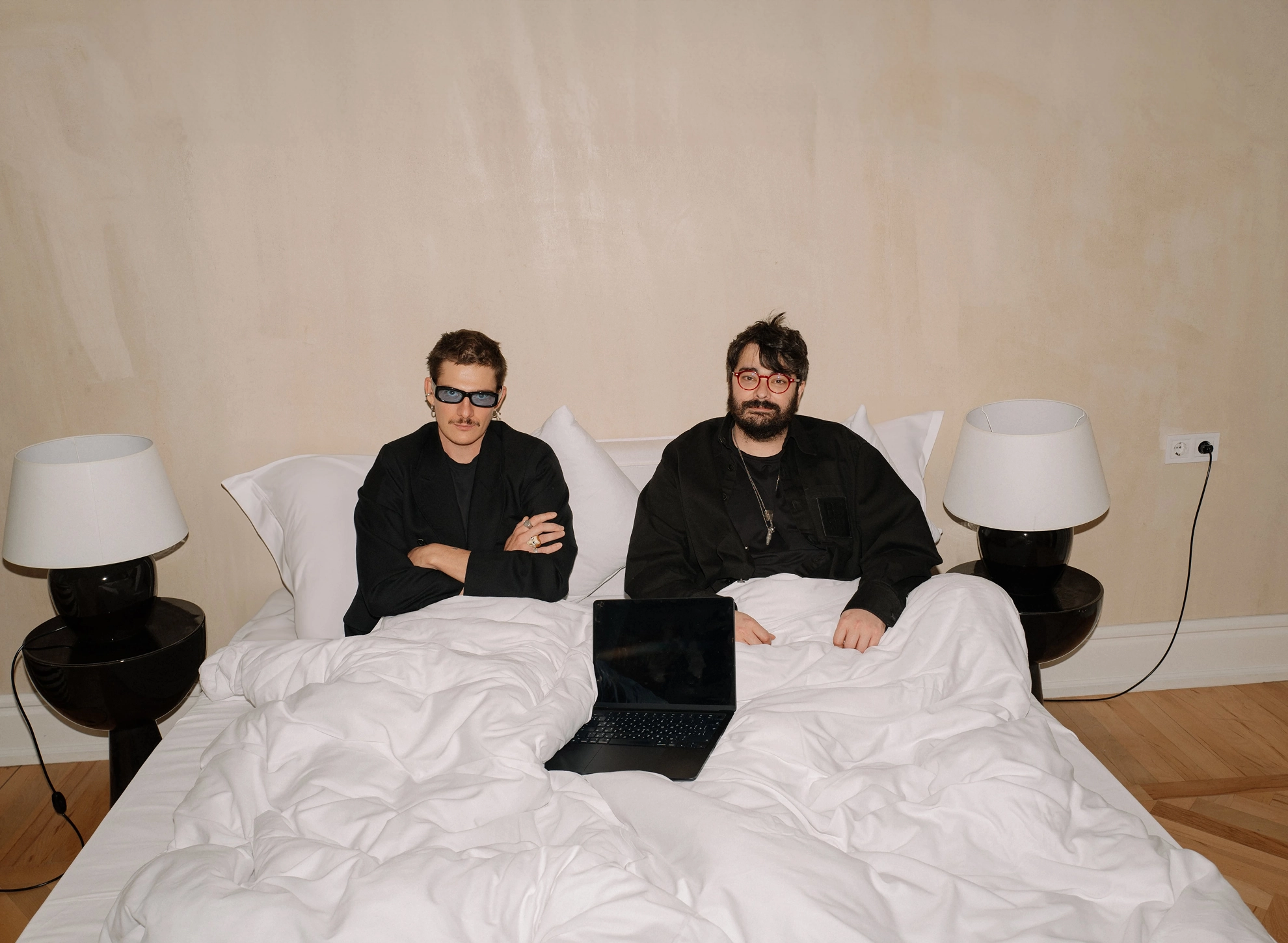
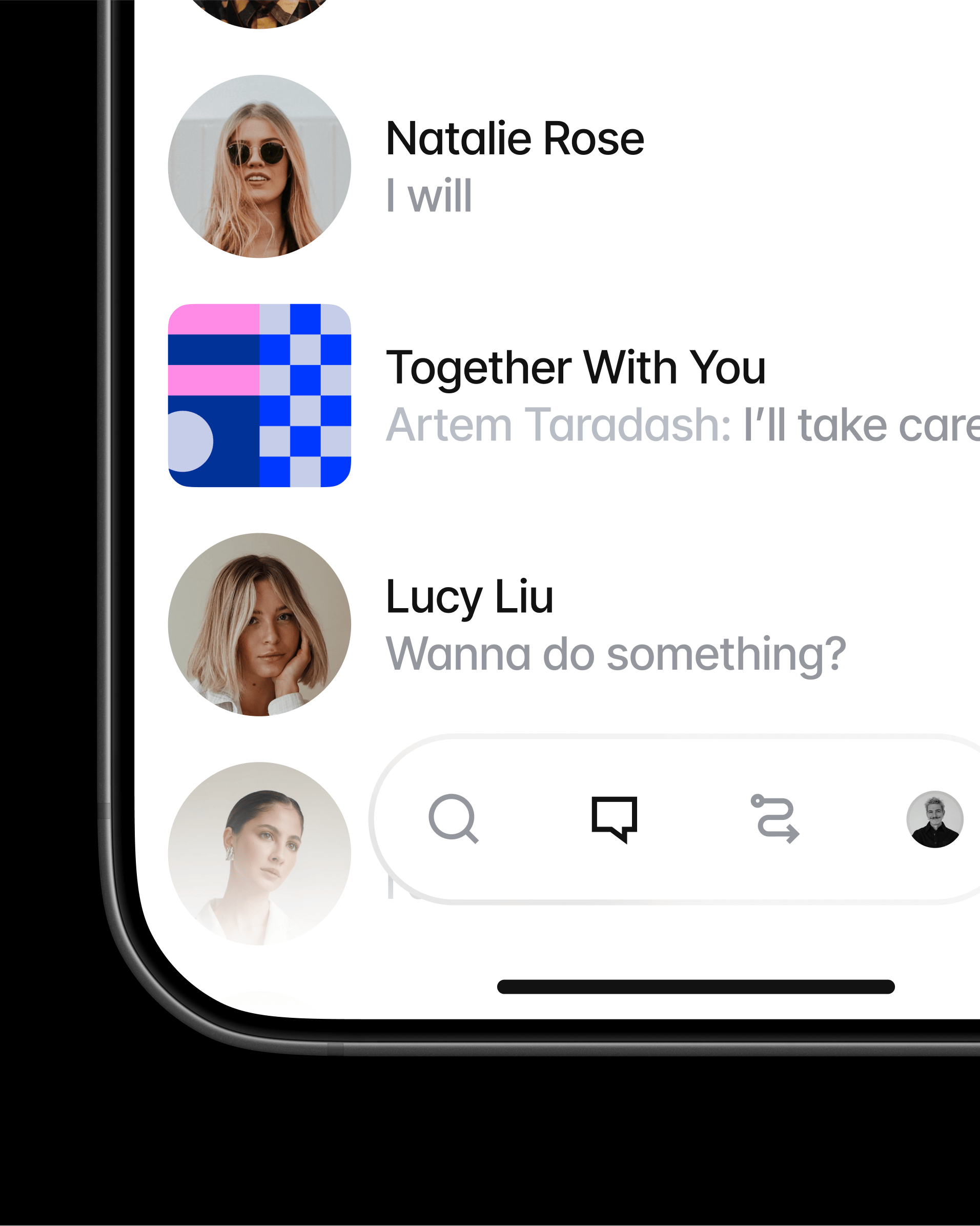
We called ourselves "Together with you" because we really do build everything around people. Creative work, business, design – for us it's all one. But it's defined by the people in the room. There are three of us in this Zoom right now. This conversation turns out the way it does because there are three of us: take you out of this conversation or take Artem out and it would be different. And this conversation, this Zoom, can be considered a finished work. Every person changes the result. It will keep turning out great as long as these people are ready to be honest, authentic, and responsible.
It's a question of building relationships – inside the team, with other people, with clients, with collaborators. Building those relationships through trust, responsibility, and authenticity.
> The A¹/A² attribution below is not confirmed – waiting for a second pass with Yulya.
These principles, let's call it a manifesto, briefly and concisely listed – they most likely appeared organically? Did you fix in writing something that already existed? It's interesting to dig into the organics of how they appeared. Was there experience working in other teams, and you sat down and thought: "We don't want it this way"? Or did you nurture an idea and it was born? The point when you came together and started your studio work is interesting.
It's funny that you've already answered it yourself. The organics of how it appeared are in the organics [laughs]. That's why we don't say these are super long-term principles. We grow together, each of us brings something new, and we don't put a roof over this foundation. Dieter Rams's principles always annoy and infuriate me: he's like, "I'm so big that I'll just go and describe all of design." And to me that's nasty nonsense.
It's absurd – to describe all of design. How would you describe all of humanity? It's impossible. And design without people is impossible. You can't describe humanity even at a single point. How would you describe the principles of design in the long-term future? If you lay his principles over contemporary design, they fit nobody and nothing. And what, run around with them? When design is turned into a rigid school structure – Bauhaus, Dieter Rams – you can teach it in school, but then you can't do anything with it, because you jump out of there and the world is different. I don't want to live in panel blocks, blood of the blood of the Bauhaus. And likewise I don't want to live in Dieter Rams's world. You can't even take your pants off there, can't walk around naked at home. You have to wear pants at home, where everything is done "like Dieter Rams." Wear pants? Go to hell. I want to walk around naked at home, do something like that, piss in the middle of the living room. And Dieter Rams doesn't allow himself that. And in the end it turns into an absence of movement. Design is now starting to negate minimalism, organically outgrow it. Look at the new iPhone, it itself jumps away from what minimalism is. That's neither bad nor good, some people like it, some don't. But you can always change it yourself. And as soon as we stop giving birth to these memes, in a week we'll die. That means our life has stopped. That's why the principles of Together with you are built exclusively on organics. But there's a basic thing in there about collaboration. And a basic one: that metaphor and this primary ecstasy rule the world, the rest is secondary.
I just caught a good thought. By contrast: the role of chance is very important. That's why "about organics" is cool. And that's why Dieter Rams and Le Corbusier are people of the past: there it's anti-chance, anti-nature. An attempt to design something against the grain, some ideal something. But there's no such thing as an ideal. And in the end these people turn out to be angry old men. [laughs]
And people who die in happy old age have, as a rule, filled their lives with something else. We try to pay attention to chance. It's largely a story about the number of people in the room, and who they are determines the result of the work. Sometimes you don't even have to do anything: the idea is born through the formula "you plus me plus someone else." And chance can have an influence – an external event, the environment, the time of day, the weather, your personal state. You can't deny the significance of that. A certain event can have authorship within the result of the work. If an event can have authorship, what about people?
Awesome design is the result of mistakes, not of right decisions made. You found something, a little joke, an artifact, and it became the foundation. Or you found something that can become a long event within your thinking, a signature thing you can lean on afterward. But sometimes it's just mistakes. You have no idea how it happens. It happens because you talk, joke, play, think about each other. It's definitely not a thing like "let's now beat design with seven principles." Who the hell knows.
Awesome design is the result of mistakes, not of right decisions made.
– Artem Tarasov and Artem Taradash
I'm not denying that someone needs it. When you have a very large team and can't catch the connection personally, yes, such things are needed and worth fixing in writing. But if we're talking about something very resonant and subtle, the role of triggers and the role of the moment grows. They can be tracked, which means you can also fix some authenticity. But if we start making design for something very big, to please everyone, we get a general smeared thing. And around your projects, for example, you can have a discussion. You do branding cool – specifically a brand, because it's distinctive, it's fun to remember. That's probably the main value. If you start smearing it across a large number of people, compromises begin.
Not that many people are ready to take responsibility for making an impact on a brand. And that's fine, people shouldn't take responsibility for someone else's business. If you're employed in a corporation, it's not your company, you owe it nothing – you have a commercial, goods-and-money relationship. But there's definitely someone for whom it's more than a job. There can be many such people. And they…
> The A¹/A² attribution below is not confirmed.
I'd like to ask about routine. Do you each have a favorite ritual? Not necessarily a shared one, they can be different.
It's hard to treat this as "work." It's just time you spend on what you like. You want it to be great, you spend an hour, two, ten. If I want to, I spend it; if I don't, I don't. Sometimes there's a presentation deadline: "by this time we need to show something." That's the only "need."
The ritual of "being effective" is a slightly silly subject. It seems everything should be a pleasure to the same degree: making a little coffee, cooking dinner, going for a walk, doing sports, doing a bit of design. Not "resting from one by doing the other," and not "I'll go get hyped so I can do design afterward."
What matters is that the two of us are here, and the clients. The rest is secondary. I have no problem starting work from the toilet, from an airport, from anywhere. [they laugh] Do you have something like that? Do you do something every day before work?
There are no rituals in the sense of "I can't do without it." We've worked together from all kinds of places. But there's one permanent thing: every so often we just check in, keep in sync around each other. That's what "keeping the relationship afloat" is. When there are two of you, it's like family, like a romantic relationship. It's important for us to understand each other on many levels.
> The A¹/A² attribution below is not confirmed.
The last big question, about AI. I come across different opinions. From my own experience I see: if you're a person who can form a vision, working with AI is cool and fast. If you're a master, you draw a typeface, lay out a book, then AI isn't anywhere close yet. I'm more in the first camp. What do you think, and how actively do you use these tools?
We use it very actively. The specifics matter here: we're digital-first, and we do little hands-on work, we almost never do packaging, for example. I can't say I personally miss it: sometimes I want to make something by hand, but it doesn't affect the result. I see design a bit differently, and I think Artem and I agree here. When you walk home a certain way or choose what to cook for dinner, that's the same moment of design as any other. It's just a creative impulse, a moment when your creative side switches on and starts solving a problem in a non-trivial way. And you can solve it very cheaply by ordering food on Wolt, or you can cook it yourself. AI is just ultra-fast tools for solving your creative tasks. You'll have different cases, and the world has room for everything: both the thing you need to make slowly, with all your hands-on mastery, and the thing you need to make fast, at a click, by describing a prompt or just thinking.
I've heard opinions about AI as something monstrous: it will take away jobs, change the world. It seems to me that's design too – coming up with a new way for yourself to exist in this changing world. If you can't, I'll reason cynically, then maybe you're bad at design too? If you can't find your bearings in a set of random events and changing factors.
There's room for everything and there will be. It will just get mixed up, how often it happens. Newspapers moved to the internet, magazines stayed. The printed press stayed, it just started to perform a different function. Nobody reads those texts, but they put in beautiful pictures. AI doesn't negate craft, it's just another kind of craft. Before, books were typeset on a press, and now not on a press. Same thing.
You choose from a multiplicity of ways: I want to do it in AI, then send it to Photoshop, finish drawing it and post it somewhere. AI neither ends nor begins everything, it's just there. It's never "only AI." Figma is like, "Well, I'm definitely not going to collapse." AI is just a Figma function. You can close some number of tasks there, some number here. But there's no such thing as "this thing will do everything itself." Photoshop can also do a lot by itself, Figma can do a lot, and that doesn't kill the people around.
AI doesn't negate craft, it's just another kind of craft.
– Artem Tarasov and Artem Taradash
It's, like, the artist's euthanasia: he constantly goes into euthanasia, kills himself at the end of every result. And in AI there's none of that. You're just in a loop: you look, you look at something else.
– Artem Tarasov and Artem Taradash
The hyped-up claim is that AI will kill all the professions, period. It will kill professions that dealt with the descriptive space. By "descriptive" I don't literally mean "finishing drawing, finishing up," I mean places where there's no primary impulse. AI will settle a lot there. But when it comes to the initial impulse, even in architecture, in car manufacturing, you have to come up with some specimen. In AI you just keep pushing: "Do this, do it this way, show it this way." You stop: "I like this one" and go dig deeper there. It's the same craft, just faster. Before, you'd have fought with 3D Max for millions of years, and now you toss it out: "Give, give, give, I want it here. Let's go."
And everyone is trying to solve the problem of entropy inside AI, that it doesn't always give the result you need. To get it to give the needed result, you have to grind: one comes out of the other, because it always starts from chaos. How to evolve this chaos – those are the main problem areas. You're always in entropy anyway. And when you do it by hand, you're also in entropy. It never turns out the way it is in your head. Never. It's just that there they give you the result faster: looked, moving on.
An interesting thing: when you do something with AI, you stop taking it too personally. It's easier for you to give up on rotting branches off the main idea. "No big deal, I didn't spend that much on it." You go back, move on. And that, on the contrary, gives a huge boost to what you get in the end. Maybe in the end you'll do a photo shoot and shoot people. But to get there, you have to iterate some number of photo shoots. Why are there so many crappy photographers? Because they didn't have AI. They see something in their head, and in the head it's magical. They shot it, and then they're like: "Shit." And there's nothing you can do about it. It's, like, the artist's euthanasia: he constantly goes into euthanasia, kills himself at the end of every result. And in AI there's none of that. You're just in a loop: you look, you look at something else. Designers' visual literacy grows very nicely because of AI, they start comparing a huge number of things. I don't see pain in this. I see an incredible opportunity to develop even faster.
> The A¹/A² attribution below is not confirmed.
I latched onto entropy. When you work with a chat, you write a request, and it all starts with an idea. And that links up with what we talked about at the beginning: if you have the idea, you're halfway there, what's left is to find the execution. And in execution there's a big palette of solutions, and someone might fail to draw it beautifully. How is your path from idea to picture organized? How do you determine quality? You're two different people, each with your own vision.
You have to trust yourself. Sometimes the first things that come. Obviously they often need polishing, grinding, but that's already technical stuff. We actually made Together with you after many years in design. It's hard to imagine a studio of people who've only just entered the profession and want to…
It's a question of intention, bro.
I'm thinking more about the number of mistakes and bumps you've taken. As a result your own handwriting forms. And that's what relates to quality – a certain handwriting has the category "good quality / bad quality." But these categories are always individual. Now this is also changing by generation: I see what Gen Z likes, and it's different. Rougher things with more life in them. Before, they didn't fall into my personal "good / bad quality" category, they dropped out. And now they do.
Quality is a subjective thing. It's not an objective parameter. It's tied to what a person has gone through in their life. I can't define quality. It happens: you look, it seems bad, but it also seems good. Or everything is good, but one thing bugs you so much that you're like: "It's all crap." I try to outgrow that in myself, to be critical, to say "this is bad, this is good." Because as soon as that appears, schoolishness appears. Like "the fork goes on the left."
There are stories where we make something, then the guys make something – "that's bad." But we start slapping each other's hands for it. Either Artem says "bad," and I'm like: "Artem, it's just development, it's their vision, the next step. We don't know what stage of understanding they're at." Or I'm like: "Oh, how bad!", and Artem says: "It's the next step for their development" [laughter]. That's how they look at it now. And that's it.
Quality is also some moment about the grind. When you've calmed down, you look and you're like: "Well, okay, that's it. Seems done." That "seems done" moment, first of all, looks nothing like what you had in mind. Second, it's always imperfect, there's always something to finish. It's a mix of being fucking exhausted and utterly sick of it, wanting to switch to something else, and some real degree of being finished.
And another interesting thing: I recently noticed that I like all of our projects, but in the latest ones there's some moment… Not "like more," but "differently." I think in a year I'll look again and see something new. It's important to keep noting that some development is going on. And if you've reached an ideal that doesn't exist except in your head, you have no way to go further.
Only like Dieter Rams, you can write lists of what your ideal consists of. [laughs]
> The A¹/A² attribution below is not confirmed.
At the start of the interview a quote from the past came to me. In the Teenage Mutant Ninja Turtles comics there was a phrase, "constancy of change." Close to what we're riffing on now: life, movement, interaction. Projects should live and change too.
That's a great reference to Machiavelli. He has "everything true is false."
Constancy is variable.
1. Speaker attribution. Yulya confirmed the attribution for the first two sections ("Part 1": A¹ = Taradash; "Principles and memes": A¹ = Tarasov, A² = Taradash). In the remaining sections the A¹/A² labels are left marked (attribution not confirmed) and are waiting for a second pass. This matters especially in places where a thought develops across several lines: so that it's clear the same person is speaking.
2. Title. The current working version is built around the "antidisciplinary approach": "Not multi-, but anti-." Alternatives, if you want something different: – "The antidisciplinary approach." Together with you on the studio's principles, rituals, and craft in the age of AI. – "To come up with something cool, you have to negate the discipline." Together with you on the studio's manifesto and AI. – "Design comes two steps before drawing." Together with you on the antidisciplinary approach and the constancy of change. "Constancy is variable" is left as the closing section.
3. Standfirst. Confirmed ("ok"). I'm leaving it as is.
4. Length. The original transcript was ~7000 words; this draft is ~3500. I cut it by removing fillers, repetitions of the same thought in different wording, and my own long meta-questions. I did not cut a single meaningful tangent (Dieter Rams / pants / the artist's euthanasia / Wolt – it's all there).
5. "Piss in the middle of the living room" in the anti-Rams rant. A strong phrase, very characteristic. I kept it. Ask the guys whether it's okay in publication; if they're against it, we'll replace it with a softened formulation or skip it. It's their word, their decision.
6. Pull-quotes. Currently four, two of them longer (per Yulya's comment): – "Design is actually two steps before drawing or designing. It's in the moment of the idea." – "To come up with something cool today, you need to negate the discipline you came from. To come up with something within a digital product, you need to negate all the other digital products, the standard solutions, the way things are done." – "Awesome design is the result of mistakes, not of right decisions made." – "AI doesn't negate craft, it's just another kind of craft." – "It's, like, the artist's euthanasia: he constantly goes into euthanasia, kills himself at the end of every result. And in AI there's none of that. You're just in a loop: you look, you look at something else." If five is too many, we can easily cut to three or four.
7. Subheadings. I kept the ones from the original (Principles and memes, Genesis, Rituals, AI, Quality and evolution, Constancy is variable), because they break up the long text well.
8. Places I merged (because in the transcript they were duplicated verbatim or nearly verbatim): – The lines about "the only 'need' – the presentation deadline" appeared three times. I kept it once. – The lines about "we keep in sync" also appeared three times. I kept it once. – These are safe cuts, but if you want to see the originals, I'll tell you where to look.
9. Places I removed entirely: – The meta-line bit at the beginning ("Okay, got it / Oh, great / I said it would be hard") – per Yulya's comment "no." Removed. – The transition at the start of the "Genesis" section ("A¹: What else? Maybe you have questions so far? / DF: I do.") – per Yulya's comment "no." Removed. – Yulya's long pre-formulation about AI of 600+ words, condensed to 3 sentences. If it's important to keep your original intonation, tell me and I'll restore it. – Yulya's intermediate question about "fat ideas" / Revolut. That's a side plot, it falls out of the main movement. If you want, I'll restore it as a separate small piece.
10. Formatting. – "zoom" (in its Russian spelling) → Zoom (per Yulya's comment). – I went through the text and cut excess dashes (per Yulya's comment). Where dashes remain, they're either speakers' punctuation in characteristic constructions ("Not multi-, but anti-"), or a separator inside pull-quotes (where verbatim wording is preserved), or pauses inside long lines without which the meaning runs together. If they still get in the way anywhere, flag it and I'll remove them individually.
11. Nothing added. All the words are from the transcript. Where the order of sentences was rearranged or two adjacent paragraphs were joined – that was done for coherence. Where it's cut – it was cut by removing fillers and verbatim repetitions. If I mistakenly cleaned out any "characteristic little words," flag it and I'll restore them.
Design comes two steps before drawing or designing. It's in the moment of the idea.
– Artem Tarasov and Artem Taradash