
Business Context, a Brand's Core Idea and the Place of AI in a Designer's Work
Let's start with a definition – what do you mean by design culture? What is it for you personally, maybe for your projects, since you have several? Is it values, principles, a foundation, the responsibility you take on?
Good question. Let's probably start with the fact that I'm an art director on a project – I'm not a designer. On one hand, I'm an art director, on the other, I'm the founder of a studio. And that shapes a certain view of design.
I was a designer myself, so I'm not purely from business, although I'm from business too, but I also worked as a designer. So for me, the business side is very important in any project.
It's about understanding the broad context in which this design will exist and live. For example, if it's branding we're creating – who it's for, what its goals are, what we want to achieve with this design.
So it's very important for me to build context around the design being created.
And that's what I often see – designers underestimate context. Context in the broad sense depends heavily on the product, on the state it's in, on what a person is doing when they use this website or this product. Understanding and gathering context – both audience context and business context – seems to me a very important part of a designer's culture.
As for rituals – rituals specifically within the team. I believe designers are people for whom it's very important to enjoy their work. They're not workers at a factory machine, or professions like that.
For many designers, design is life. For all good designers, design is a way of thinking. It's much more than just a profession, more than just showing up somewhere to work 8 hours.
And I think that's the understanding with which you should approach a team. Outside of work, for example, we have a meeting on Tuesdays where we discuss any topics we're interested in that relate to design, or may not even relate to it – art, film, books, architecture, food. We've discussed a great many topics, even clothing.
Basically, design of anything. Including fabric design. Everything that exists in the world. We do it as a talk, where each participant prepares a presentation, or we run interesting workshops – for example, drawing a letter as if it represented a brand with a certain character.
We always do something interesting together, apart from work.

Tell me about your path. It's important for me to hear how you came into the profession and what turns you took along the way.
I came to design in a very unusual way. Designers always seemed to me like magic people, wizards who do it in some totally incomprehensible way, because I was on the client side. I have a management degree, I was building a career: my last position before going into design was manager of the Saint Petersburg School of Television in Chelyabinsk. We were opening a branch, and I led the opening, the hiring, the launch. And there were web design courses there, among others. I was simply curious to see how these designers do design.
I thought buttons grew on trees. It never even crossed my mind that someone actually draws a rectangle and puts a word in it. When I went to those courses, I was in wild delight: I really liked how it all works. I realized that this creative component, which wasn't in my life, was something I'd been missing a lot.
The moment I finished those courses coincided with going on maternity leave. And on maternity leave I started with just freelancing. I wrote on VKontakte that I now make websites for whoever needs one. My first acquaintances came to me, and it started going really well, because I understood perfectly how business works. Freelancers often don't understand this, and that's why it's hard for them to communicate with clients.
I thought buttons grew on trees.
– Anastasia Sycheva
And how did freelancing turn into a studio?
At some point I got bored sitting at home alone making websites. I'd always had a team that I managed. I started inviting other designers, and we began working in Chelyabinsk. And I ran into the reality of small business, with all the pitfalls freelancers step on: the client understands nothing about design, strange requirements, doesn't pay or drags out payment.
I was very curious how it works in other studios. I launched a YouTube project. Five or six videos were enough, where I interviewed founders of other studios and talked with them about processes. The channel was called "I'll Ask the Cat," because it got to the point of absurdity: the client says "I'll ask my wife whether she likes this color or not." I took that to the maximum and named the channel "I'll Ask the Cat." Like, my cat said this font suits me.
At some point I came across the Y Combinator school, the American accelerator. I started watching and realized: these are just the people I want to work with. American founders of tech startups. From that moment I started taking deliberate steps to enter that market. Now we have no Russian clients, we've fully closed the Russian legal entity and work only with America and England.
What practices or patterns help you now in your role as art director and founder?
I always try to follow my interest. To do what I have an emotional response to right now: to take on those projects, hire those people, choose the promotion channels that interest me. Maybe it's some personal quirk, but I can't work when my day is packed with tasks and meetings, when I'm constantly giving my attention to someone else. It's very important for me to have time to study something, to think about what we do next. It's about exploring my interest, not about some kind of super-productivity and day efficiency.
Right now on my desk there's Rick Rubin's book "The Creative Act." I open it to a random page in the morning and read that chapter. I think it's very important to have tools that expand your consciousness, pull you out of the daily routine, so your gaze moves somewhere up or sideways. Not where we're used to looking every day.
I can't work when my day is packed with tasks and meetings.
– Anastasia Sycheva
How is your branding work organized, what do you rely on first?
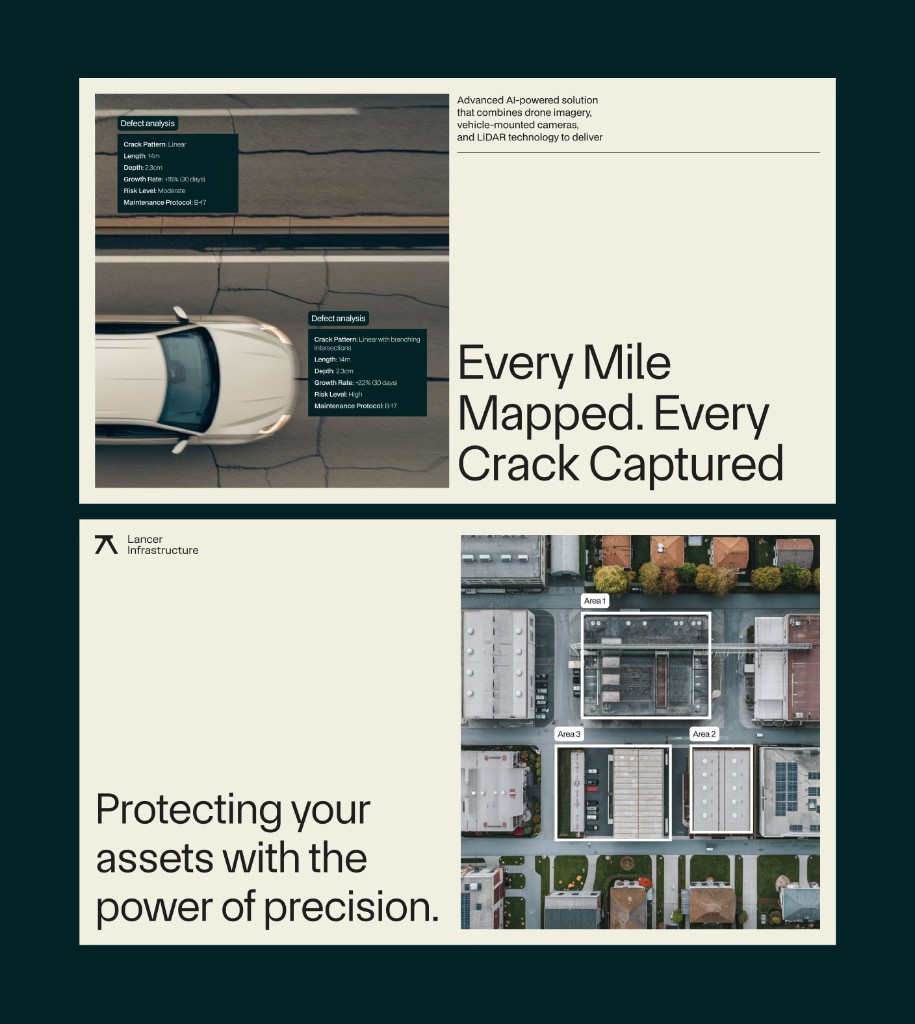
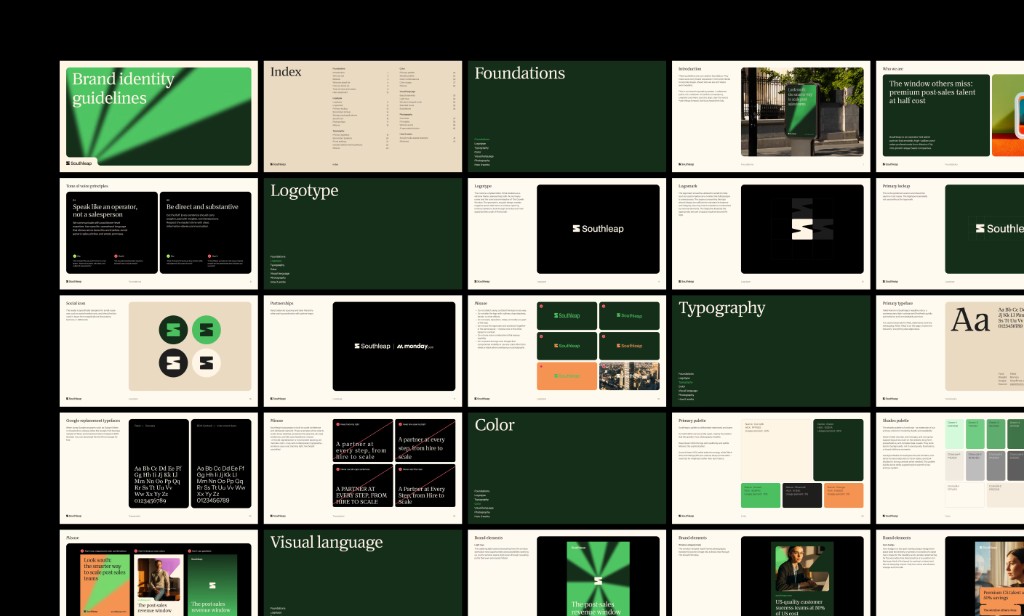
In branding, what we rely on first is that we try to understand what the value of this product is. What the one specific idea is that hits the main target audience and will resonate.
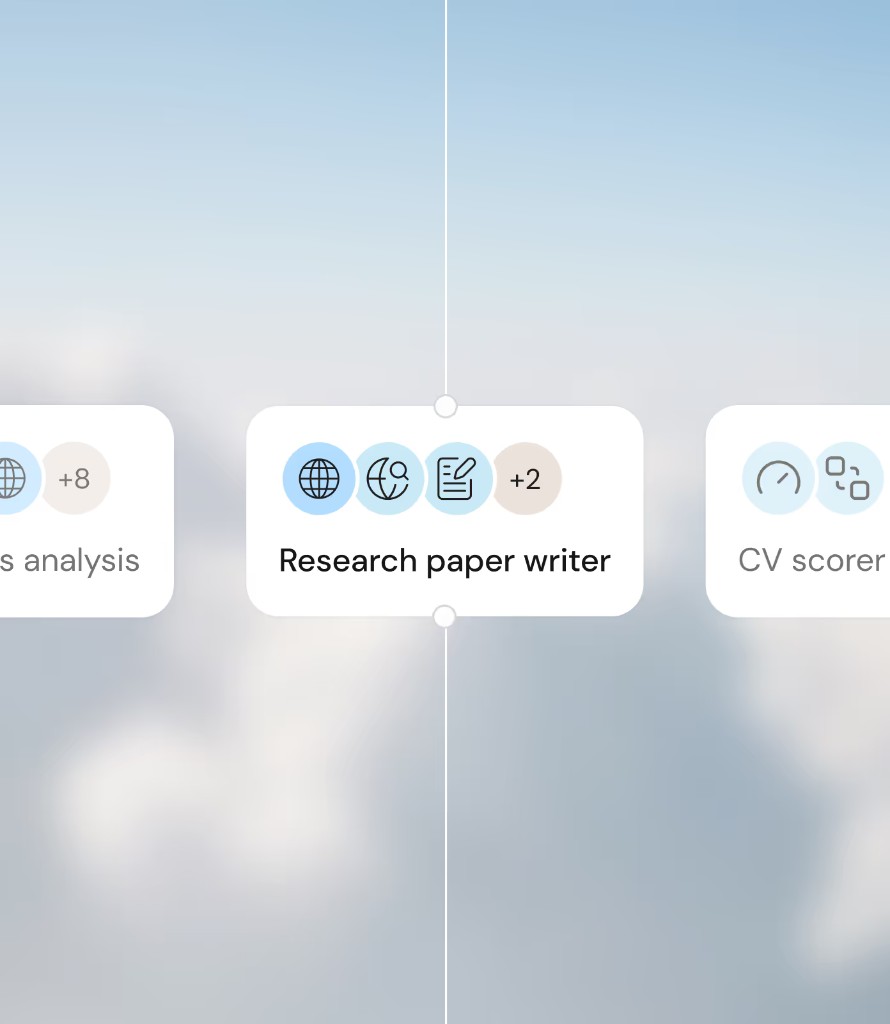
One of our recent projects: the guys are building an assistant that helps you prepare for interviews. To go through it, build your résumé, your story about yourself based on the job requirements, but in a way that's organic to your path, your value. You can talk about this product in completely different ways, there are many paths. But when we talk with the founder, we try to see this core, this one idea that reflects the essence of the product and will resonate with the audience.
For this product the core idea ended up being just a matter of practice. Then it works as a tagline: "Big interview – just a matter of practice," "A serious conversation about a raise – just a matter of practice." The idea is that everything can be learned, everything can be practiced. Practice will help you get through any difficult conversation.
When we work on branding, the main value we look for is the idea at the foundation of the product. That's what we'll convey first.
What are quality and good design for you as a team? Is there any way to pin it down?
I think there's no such thing as quality, no such thing as good design. It's all very subjective, objective notions like that don't exist. We can consider a project successful when the parties are happy with the result: the client is happy with how it turned out, we're happy with what we made.
In design there are always three sides – the studio, the client and the user, who then votes with their ruble. Are they equal?
In the end, the third side always decides, the one that votes with rubles, dollars, currency. But you can't ask the third side whether they like it or not. So during the work, the first two sides matter. If a conflict arises between the client's vision and the studio's vision, the client's vision is chosen. Because they paid money for it, it's their business, it's their vision.
In the end, the third side always decides, the one that votes with the ruble. But you can't ask them.
– Anastasia Sycheva
A designer now has a huge toolkit – from AI for text to fully drawn websites from a prompt. Where, in your view, does craft end and technology begin?
I don't see an opposition here. These are tools. Whichever tools are more accessible and effective for the task at hand get used. There's no conflict.
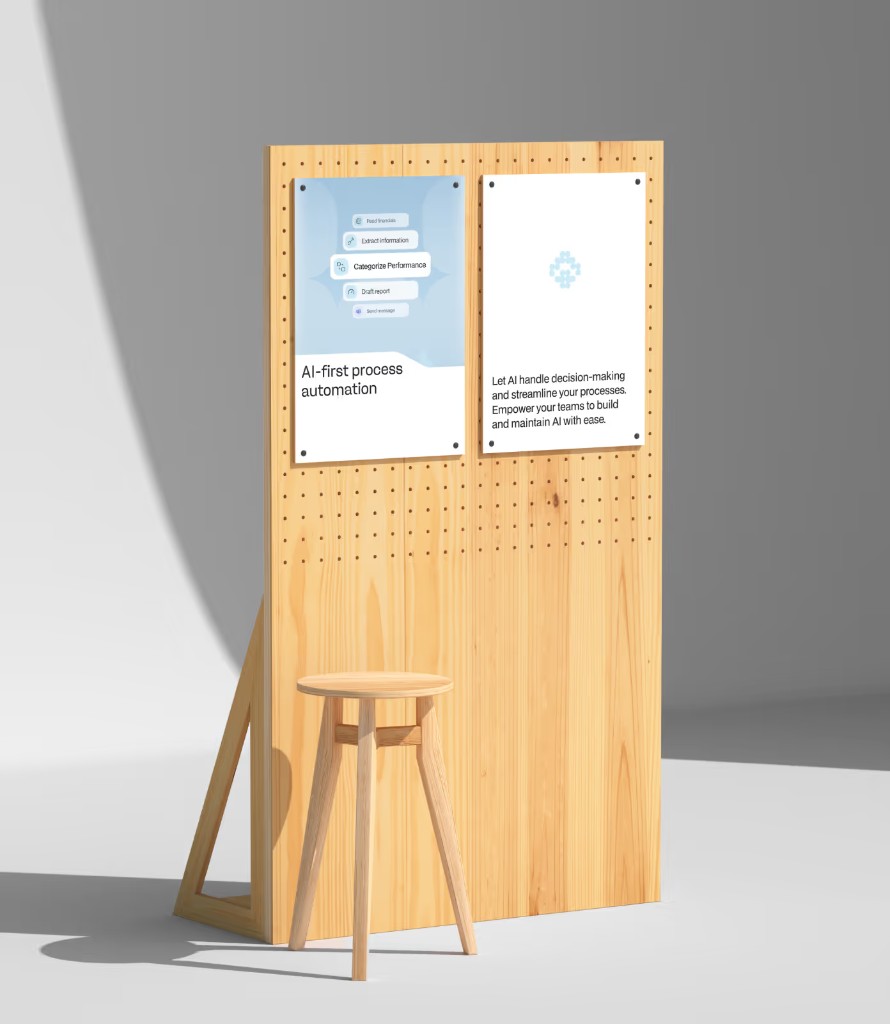
Where a potential conflict could be: if you approach the use of a tool irresponsibly, you can end up with emotionless design. Design that doesn't evoke emotion or response in the end user, because it was made on the knee. Or because AI hasn't yet learned to reflect one hundred percent the vision you put into it. You make a correction, approach the process iteratively: you get some things, you refine them. You use AI to check quickly, and then you go to a specialist who definitely knows how to work with it. You make a concept, AI is appropriate there. You move toward production, you refine the same 3D graphics with a person who's good with 3D software and can do it at a high level.
Overall, the whole conversation is about tools. We choose what fits right now. If we have a limited budget and can create a series of illustrations with AI within the needed time and money constraints, we do it with AI. If we can't, we draw them ourselves or hire an illustrator. Same with texts: if AI doesn't help or we're unsure about something, we hire a copywriter.
Most often at the start of a project we understand what we plan to do. For example, we were making a complex logo, with illustrations essentially built into the logo, and we immediately understood that we definitely wouldn't do it with AI. We brought in an illustrator. Sometimes during a project it becomes clear that you do need a specialist after all.
Choosing a tool here is exactly like choosing a color. I'd look at it as a tool that's chosen depending on context – budget, time, how complex the task is. There's no unambiguous answer that in these projects we choose this, in those that.
Choosing a tool is exactly like choosing a color.
– Anastasia Sycheva