
Meaning, Context and a Constant “Try Something New”
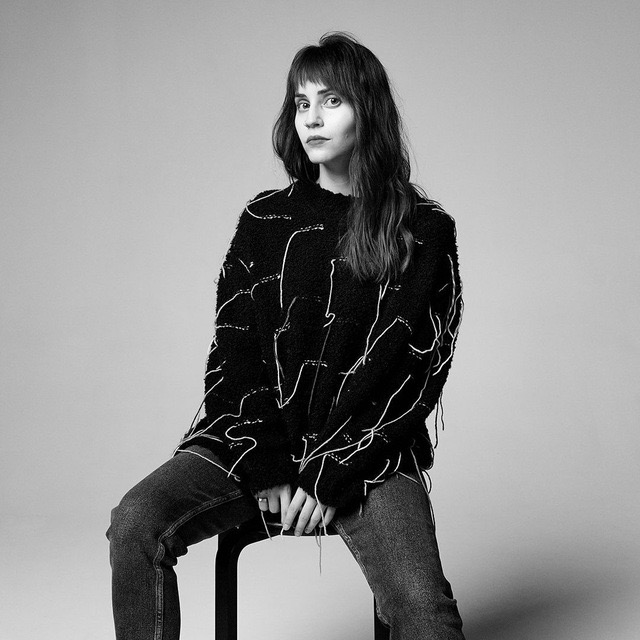
How do you define design culture? What does the concept include – principles, certain rules, readiness to take responsibility, respect for colleagues and the client?
Everyone has their own principles, of course. Some people categorically don't work with tobacco and alcohol, some don't work with sports betting. Unfortunately, when you're a junior specialist, it happens that you run into things that aren't quite acceptable to you, and you don't really have a choice. You can't quit overnight from the place you ended up in, where you don't feel very comfortable.
I thought about what matters most to me in design. First: it has to respond to the goals and tasks that are set for it. Without specific goals and tasks it's more like art. Self-expression through creativity. When there are goals and tasks, creativity turns into design.
Next, it's very important to me that there's an idea behind every project. These aren't just pictures we draw to make things pretty. You design meanings, you construct meanings with the visual images you choose.
At the start of my career I thought design was first of all about form. Now I always start from an idea that comes out of research.
When there are goals and tasks, creativity turns into design.
– Dariia Chertanova
You design meanings, you construct meanings with the visual images you choose.
– Dariia Chertanova
Another important thing is context. The same move can look completely different depending on where it sits. Somewhere minimalism will work far better than something bright. If the context the design will be placed in is all bright and colorful around it, a minimalist poster will simply be noticed much more.
The most banal example, which I gave my students at Bang Bang Education, is a red rose. You can give it to a girl on a date, or you can lay it on a grave when you come to visit someone close who has died. The same solution, a different meaning.
I think that's a good, expressive way to end the thought. And context matters: so design still can't be purposeless. If we're not pursuing any task, it's already art, creativity, research.
Yes, the idea comes out of context. Relying on context and on the tasks, you look for an idea. And then, through the idea, you look for a visual form to express it. That's the formula.
It's also very important to me to stay flexible. Not to get preserved in one particular visual style, in particular solutions from project to project. It's great when you keep trying something new. That can be new tasks as well as new visual solutions.
I know that many beginning specialists want to find their style. And for them style is a set of particular solutions that carry over from project to project. It seems to me, on the contrary, that it's great when you have the desire and the opportunity to try new things. Including new tools. For example, I discovered coding as an already fairly grown-up specialist and started realizing some visuals with code. Usually these are complex animations, and often they also interact with the cursor or the camera.
Everyone has their own handwriting that can be traced even in very different projects. But constantly using the same solutions isn't great, in my view. What matters is to see the essence of the task and, for that essence, choose a suitable tool or visual solution.
Tell us about your path. How did you come to design, and what were the key turning points?
I think it's interesting to hear about a person's path precisely so you understand that they didn't become great in one moment, at the snap of a finger, but really had to go through a lot.
My path began with me enrolling in sociology at MSLU. That's the Moscow linguistic university. Sociology was a profession about everything and nothing at once, and I thought: well, later I can move on from here – into PR, advertising, marketing. On the very first day I became disillusioned with Russian education. I got the feeling that the teachers come not to teach you something but to assert themselves at your expense. There was a lot of toxicity, even though the university is big and well known. Later, when I met Artem Matyushkin, it turned out he'd had a very similar experience.
I realized I needed to seriously reflect on what I wanted to do. Choosing a profession on the basis of "I'll move on from it later" is the wrong way. I intuitively did the kind of exercise that many psychologists and coaches give now: I remembered what I loved doing as a child. And I remembered I loved drawing. I thought about what other professions are connected with drawing. I remembered design. And so I came to this profession consciously, through something I was actually going to like.
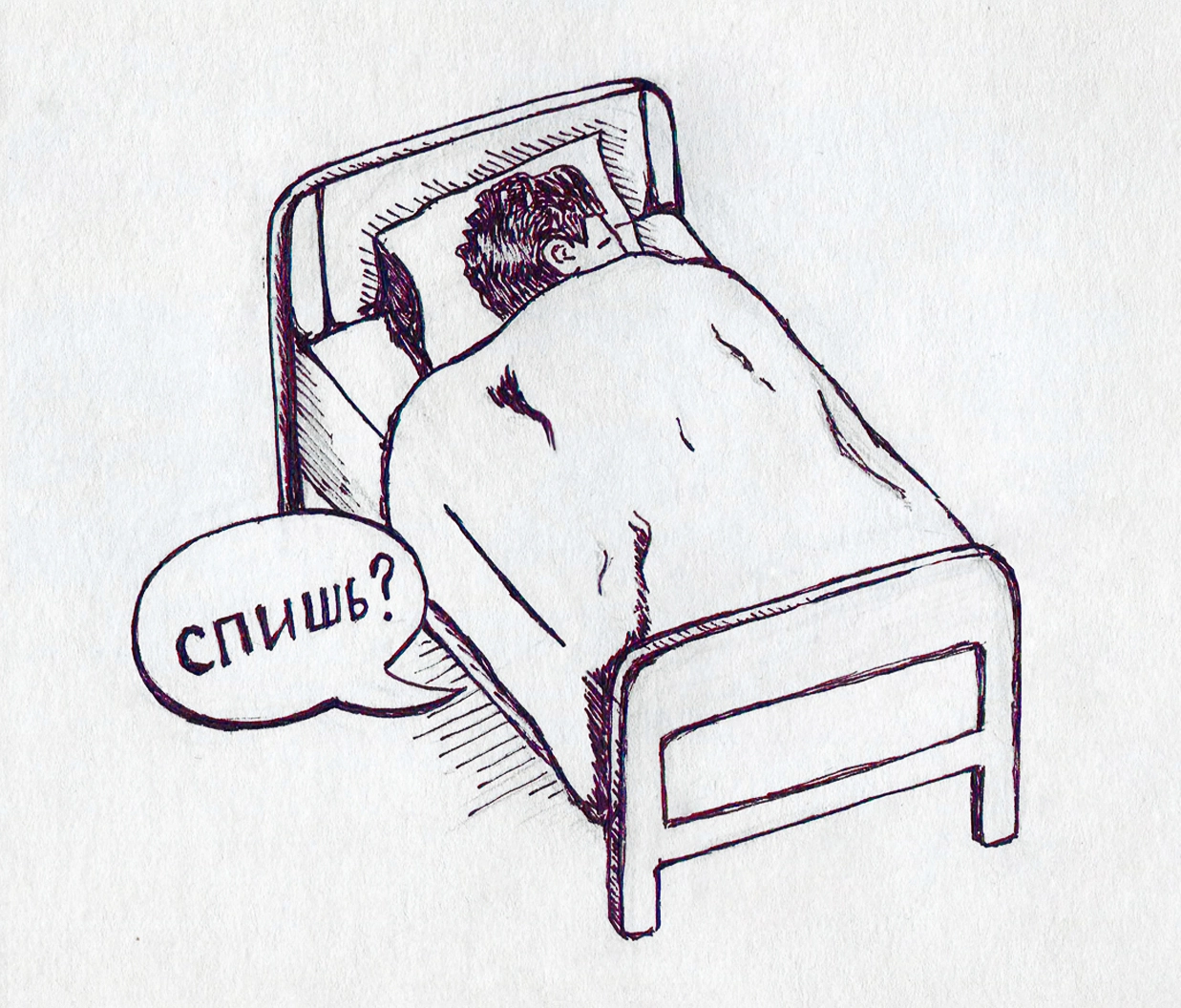
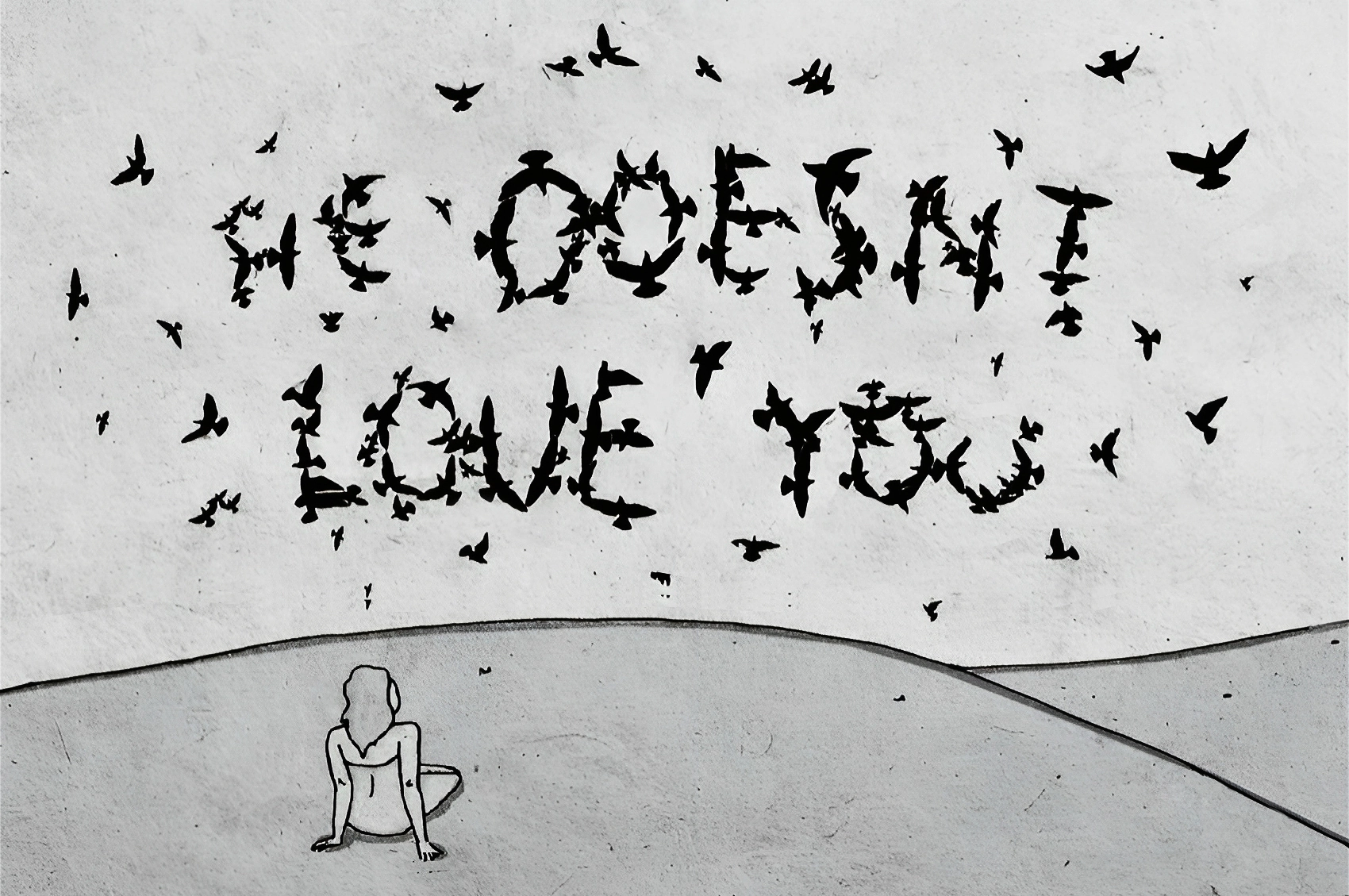
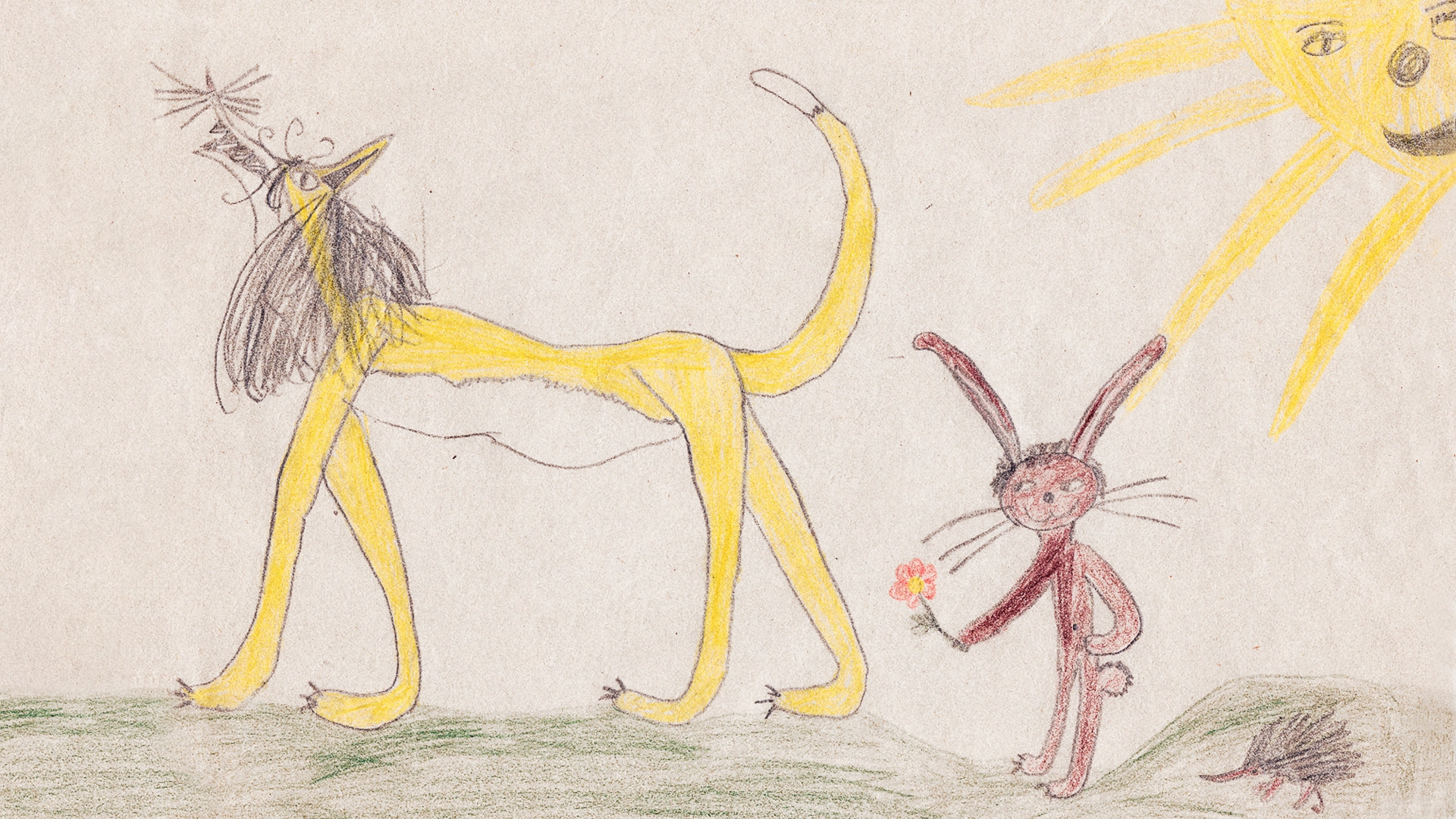
I considered architecture too, but it's stricter, more exact, there's not much room to have fun. And for me, having fun with what I do is an important component.
Since I'd become disillusioned with Russian education, I realized I should go to the evening department and look for a job in parallel. I found my very first job thanks to a party scene. A "tusovka" is both an event and the circle of people who were around me then.
I just came to a bar with a friend and met his friend, who was feeling lonely. He started asking what I do, and I shared: well, I've re-enrolled in design, but work in this field isn't going great yet. Without experience and without a degree there was nowhere to get in, especially then. It was 2013. You could go work at a print shop, but that isn't about design. There you redraw print proofs in vector and take photos of people for documents.
I was lucky: this person's friends were looking for an intern designer at Mail.ru. It was a great start. First, a big company, with tasks close to where I wanted to move. Second, I was invited into the department of non-standard advertising, essentially the special projects department. There I put together my first design portfolio on Tumblr. I didn't stress over it much, just uploaded the pictures I made at Mail.ru and my illustrations.
When I was thinking about which projects changed me a lot or influenced my perception of the profession, I realized it wasn't projects but people. Both very positive influence and negative, but the kind that led me to where I am now.
I had great managers. After Mail.ru I came to Look At Media. It's a media group that included The Village, Wonderzine, FurFur, Look At Me. There was the editorial art director, my first, who saw in which direction I wanted to develop and mentored me really well.
And there was a very toxic boss, with whom I worked for a whole three years somewhere else. Better not to write exactly where. He could write in swear words and all caps, and couldn't explain what he didn't like. The process went like this: I send him something, he says – move it two millimeters to the right. I do it, send it. He: no, it's turning out some nonsense. And I think, well, why are you giving me a comment like that. In terms of projects, working there was great: I made all sorts of merch with little things, all sorts of fun stuff. But the experience with the manager himself was very unpleasant.
And that very experience made me understand that I want to move into mentoring. I want to become that very support and backing for young people that I myself lacked for a long time. To help someone feel more confident. To enjoy the process rather than chase only the result.
It wasn't projects that influenced my profession but people. Both very positive influence and negative, but the kind that led me to where I am now.
– Dariia Chertanova
Among the people who influenced me are also Tolya Grashchenko and Yulia Kondratieva, the founders of the Werkstatt school. I took a coding course there, and I liked that I'd found people just as passionate about their work. It's not a job in the spirit of "come in, draw, and go home with a clear conscience at six." People really do what they genuinely like, and that charged me up a lot.
That's also where I met Artem Matyushkin and Katya Sikacheva. Thanks to them I started looking for ideas for my projects differently. Not through visual references but through text. For me that was a big discovery.
In Artem's identity course I made a project that would have been impossible to come up with from references. It was conceived precisely from a text idea. It's an identity for a coworking space called IRL, as in "in real life." The space was very important, it was made for people to gather and work there together.
The idea was textual. I thought: IRL is some kind of sum. An equation into which certain factors must go. First of all, a coworking space is made for people, that's the first part of the equation. The second is the reason they've gathered together. The third is the period of time when they gather. The word IRL has three letters, and the equation has three parts too. It worked out nicely: I is "I" in English, R is the first letter of "reason," L looks like clock hands.
All the layouts were built on this principle. If you look at the poster announcing a lecture: I is about people, the Holistic studio that's giving the lecture. R is the reason, a public lecture on such-and-such a topic. L is the time, June, such-and-such a date. The sign in the space works the same way: the door goes under I, under R we write the reason people come, under L the hours the space is open. You couldn't assemble this idea from references alone. I literally spelled out in text how everything should come together.
After five years of work and my first senior position, I burned out. I went behind a bar counter for a year. After that year I became fully convinced that design is mine. What drives me is the chance to try different things and not get preserved.
Tell us about the practices and rituals that help you in your work. How do you switch off, how do you look for ideas?
Almost all my practices have changed a lot over the time I've been working. These days I actually don't look for ideas actively, they somehow come to me on their own. First there's the research stage, I immerse myself in the topic, and then I let everything go. Ideas fly in. The main thing is to be ready for them to appear. To switch on active listening, I don't know what else to call it.
I really love walking around the city and looking around. For me it's super rest when I try to find images around me that are interesting to me. It can be just traces of glue on a wall where a poster was torn off. Once I saw a sign where the letters had already cracked, and lines of cracks ran off from them in different directions. Later I used that reference in work, when I had to make a "spooky bingo" for Halloween. There, too, cracks grow from the letters.
But mostly these walks are an exercise to get into the state where ideas come on their own, without strain or forced thinking.
The main thing that has stayed with me from the very beginning and is there now is interest and excitement. When I sit down to a task, it's very important to me that it's interesting: what will come out, how will I even solve this. And lately, now that experience has accumulated, it's important to solve tasks in different ways. Not to do the same thing.
I don't look for ideas actively, they somehow come to me on their own. The main thing is to switch on active listening.
– Dariia Chertanova
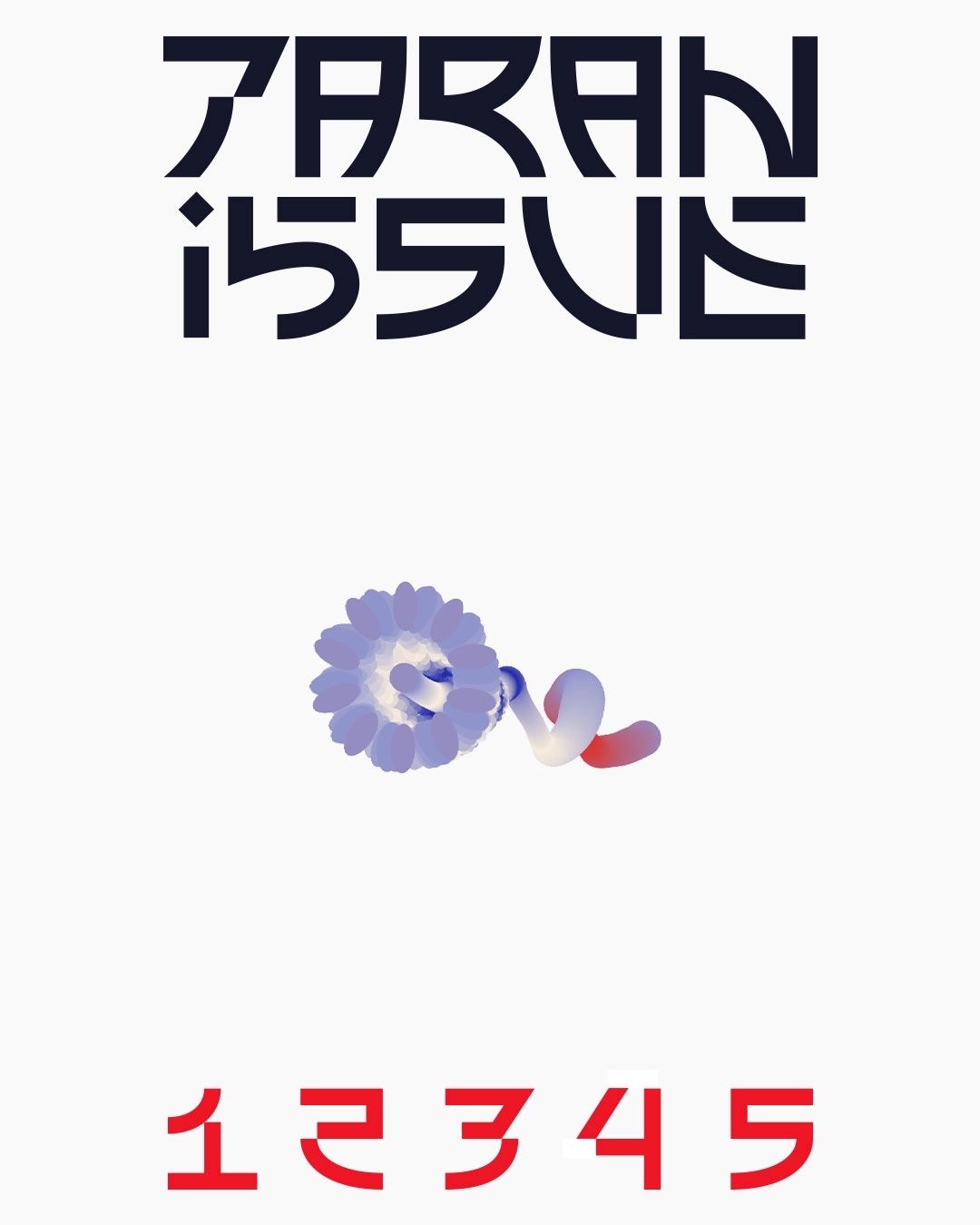
A good example is our latest special issue at The Blueprint about time. When I'd just started thinking about how it might look, of course I remembered the Werkstatt exhibition in Seoul with the clock faces. That could have been the solution for a special issue about time: make every piece a kind of clock face. But, of course, no, that's not the road we take. You have to come up with something of your own.
I wanted to look at time in a new way. What is it, if not clock faces, not numbers? I realized that time is also a kind of flow, some change of something. The idea was born to make a movement of rectangles, done with code. Some marks or ticks in time-space, at the events that matter to us. In the end this movement slightly resembles clockwork. They tick, though not as rhythmically as real ones.
It's an example of how I try to look for different solutions for tasks, without getting stuck on something that already existed.
Cool: I saw this thing of yours, and it reminded me of a project I did two years ago. The idea there was completely different, the whole core was in AI agents. Back then it felt like a very machine-like story, and gears appeared there that changed their look in 3D. It's just nice that you approach from different sides and the task still gets solved. The process of thinking through the concept is, of course, very important.
Which pillars do you consider key in working on a project? How do you convey this to students?
For me the most important thing is the goals and tasks set for the design from the start. Every project has its focus shifted to different things: somewhere it matters to be understandable, somewhere to be eco-friendly. It all depends heavily on the primary task.
Research is one of those stages without which it's hard to go further. Even if it's just five minutes, it has to be there. Because you want not to repeat yourself, and you need to look at what was done before you. Plus all this stuff you load into your head helps you come up with an idea that isn't detached from reality.
When I mentored students at Bang Bang Education, we spent a whole year together. First of all, I tried to teach them that their own path and their values matter a great deal – the ones they build for themselves. Everyone's are different, and I didn't want to break them and bend them to myself, like my former boss. I said: guys, if something interests you, you have to follow it, there has to be some kind of inner calling.
They asked: which studios do you follow? I said: of course, I'll send you a list, but it'll be extensive. It won't only have the studios I personally like but others too, so that you choose for yourselves whom to follow. To look at what someone's doing, but not steal.
Once I had a situation where a girl brought in an obviously stolen piece of work. I told her very gently: look, it looks as if you might have made this. I didn't point it out directly, but I made it clear there's that feeling, so let's change it. Soft, careful comments more often motivate people to get better than hard pushing.
I taught that everyone has their own path, and there's no need to be ashamed of it. There's no need to think it's worse or better than other people's. My groupmates may do better, but at some point you'll do better too, in your own "better." It's great when you value yourself and know how to put yourself first, in the sense that everyone has their own path of development. We can be happy through self-realization, and happy precisely when we choose ourselves.
Everyone has their own path, and there's no need to be ashamed of it. We can be happy precisely when we choose ourselves.
– Dariia Chertanova
What distinguishes good design for you? Is it a challenge and a break with convention, or a connection with the person who makes it?
Good design is the kind that meets its tasks and goals. In a village shop, a grocery sign with those silly photos of products will work better than some cool sign the studio Nonobjective might come up with. What's primary here is something else: why are we making this design at all. And the context where it sits matters too. If we recall the rose thing again.
Do you see a conflict between craft and technology, or do they reinforce each other?
Now many people are starting to worry that AI will replace us in a couple of years. I think that's not the case. All these things strengthen us. It's a tool just like Photoshop, Illustrator or Figma. A tool that helps you solve tasks, not one that does all the work for you.
When I was learning to code, I didn't use AI at all, and that was the only right way, otherwise you simply won't learn. But once I had a foundation, for more complex things I turn to ChatGPT. For example, I made the movement of rectangles for the special issue about time through it. First I made the movement in a simple version, and then I made it more complex. It doesn't look like "dude, do my work for me, here's what's needed." You throw in your code and write: there's this thing, it works like this, I want to add a new wave of movement through a certain function, help me write it. And you don't just blindly Ctrl-C / Ctrl-V its answer, you think through what it suggests and whether it can really be used.
For a vivid example: at The Blueprint we have a creative director, Igor Andreev. AI has really freed his hands. He constantly makes videos where, say, he's sitting on a chair, then turns around, does something else. It's all done with AI. The person has a vision of what picture he wants to get. With real production it would be long, complicated and expensive: hire a videographer, order a shoot. And with AI he does it more simply, faster and cheaper.
I recently told students at a lecture that it's great when your set of tools keeps expanding. At first I only drew on paper with gouache, markers and pencils. Then I learned Photoshop, then Illustrator, then After Effects, then I started coding. Now I've been learning Touch Designer for work. It's great to have many different tools, AI among them.
Recently I saw a post on LinkedIn where a person listed their stack of hard skills. There are so many AI tools now that the same picture can be generated in different places, and there are plenty of text GPTs too. A huge list of 50 items. And I agreed: these things stand on a par with, say, Figma or Illustrator. It's just as important to master them and use them based on your own vision.
Last year I also took a creative coding course. What pleased me: sometimes you toss in a simple thing and AI breaks it or makes it worse. But sometimes it unexpectedly does something cool. I got one thing that glowed super smoothly. Especially when you work with very contrasting things, a black background and a white image. The image spread apart so smoothly, as if it were glowing. I probably wouldn't have realized myself that I could make such a thing, and it somehow coded it out of its own mistake. It's great that you have the visual skill to judge: yes, this time it turned out well, I can take it, refine it and use it.