
Ten Principles and the Formalization of Ethics
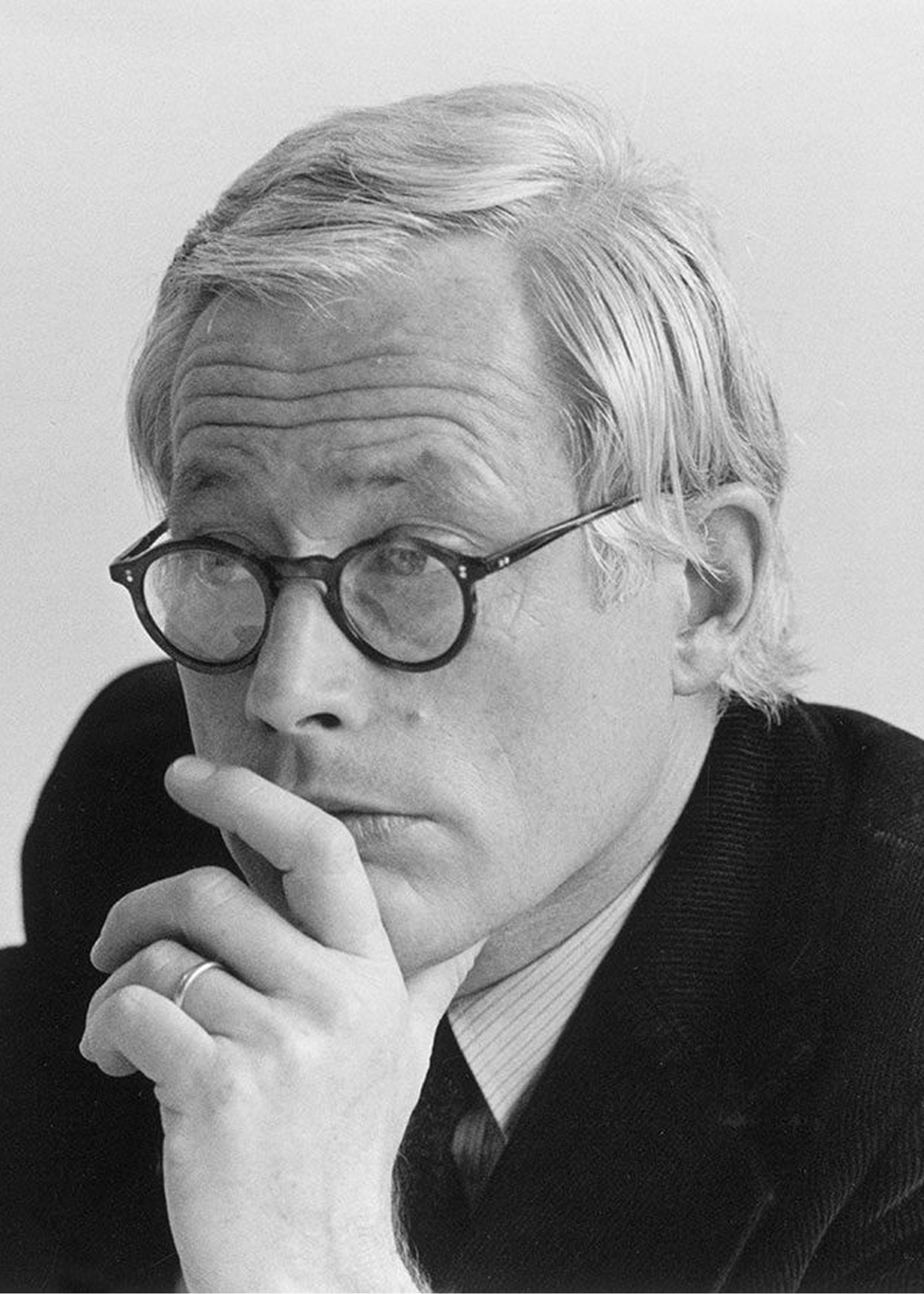
The most cited industrial designer of the twentieth century. Everyone who's ever made a presentation about good design knows Rams' principles. But few remember where they came from and why he formulated precisely these ten.
The Path to Braun
Dieter Rams embodied the synthesis of all the aforementioned directions. Joining Braun in 1955 at the age of 23, he initially worked on office interiors, then transitioned to industrial product design. By the early 1960s he headed the design department and remained there for nearly 35 years.
Rams worked within a three-way influence: the Ulm School (with which Braun collaborated), the Bauhaus tradition (transmitted through Aicher and Gugelot), and American corporate thinking. His products (radios, electrical equipment, furniture) were distinguished by clarity of function, honesty of materials, and economy of form.
Ten Principles
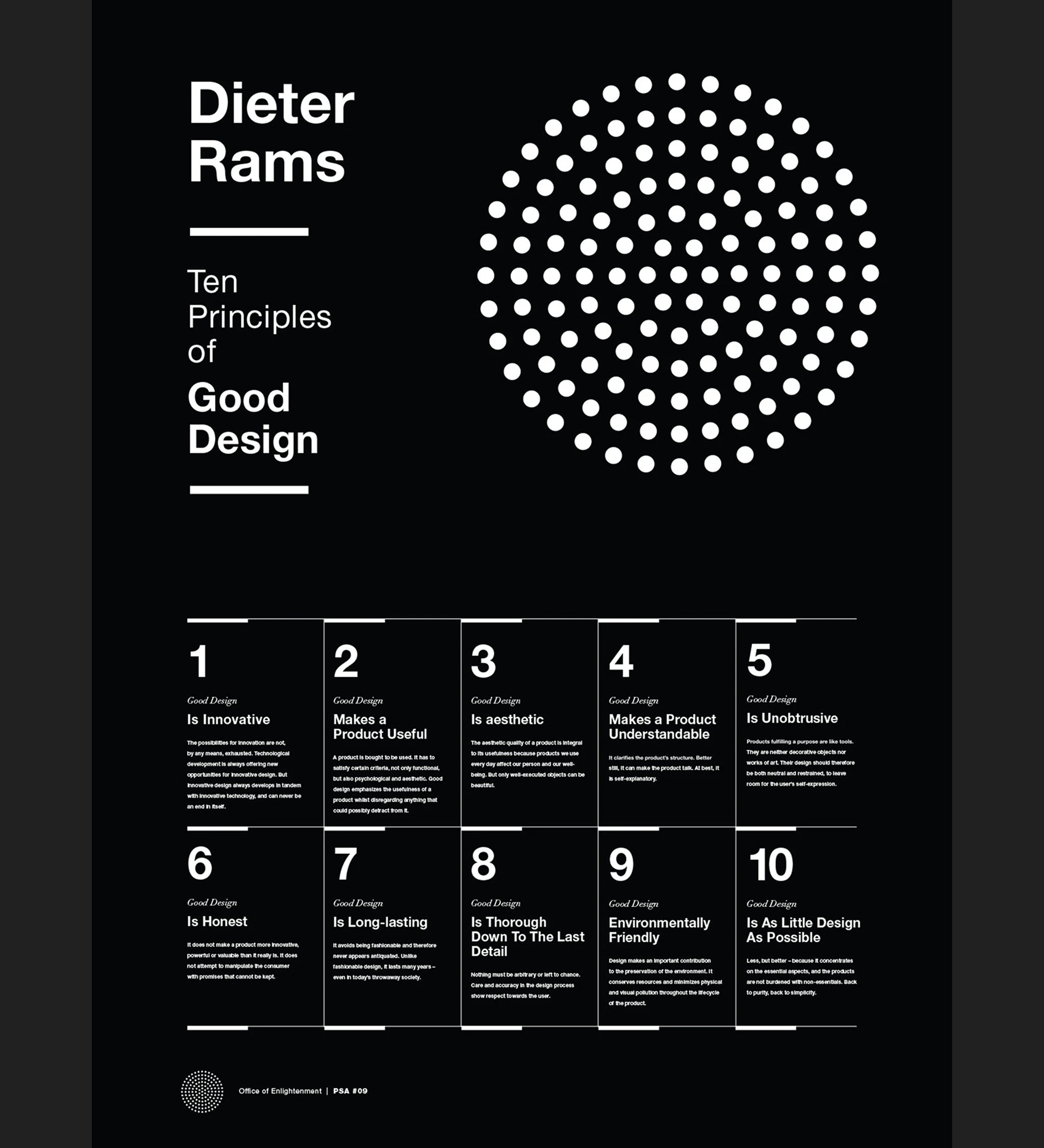
In the 1970s–1980s, Rams formulated his ten principles of good design. Critically: these were not stylistic recommendations – they were an attempt to articulate the ethics of the profession.
- Innovative. The possibilities for innovation are provided by technology, but innovation must develop in tandem with it.
- Useful. Design must make a product useful.
- Aesthetic. But not as an end in itself.
- Understandable. The product must be understandable to the user.
- Unobtrusive. The product must be neutral, leaving room for the user's self-expression.
- Honest. Design must not mislead.
- Long-lasting. Resistance to trends, longevity.
- Thorough down to the last detail. Nothing arbitrary.
- Environmentally friendly. Design as part of responsibility to the environment.
- As little design as possible. Minimal form, but full of meaning.

Less Is More
The tenth principle, often translated as "less is more," was a stand against the cult of ornamentation and display. Rams spoke of design as service, not as a creative statement by the designer. Excess became a barrier to understanding.
Design as service, not as a creative statement by the designer.
Genealogy of Influence
Rams' influence on subsequent design culture was defining. Apple and Jonathan Ive openly cited Rams. From Braun's aesthetics to iOS, from honesty of materials to transparency of interface – the line is direct. The idea of design as responsibility entered the heart of product-oriented company culture. Minimalism became mainstream not as a style, but as a philosophy: economy of means, clarity of function, respect for the user.
The genealogical line runs: Bauhaus – Ulm – the American corporate school – Rams – Apple – Material Design – contemporary digital culture. It is an evolution in the understanding of what a designer does and why.
Indifference towards people and the reality in which they live is actually the one and only cardinal sin in design.
– Dieter Rams