
An Accidental Path into Design, Empathy as a Method, and Making Peace with AI
What is design culture for you: principles, values, foundation?
I thought, design culture is a broad concept. If the question is broad, the answer can be broad too.
For me it's empathy. Design is literally about empathy in every sense: in processes, in approach, in solutions. It doesn't matter what stage, it doesn't even matter what kind of design: digital, graphic, product. It's always about empathy on both sides.
In general, empathy is a very important theme in my life. I'm super empathetic, I try to treat everything with empathy. I even went to my therapist with the same request: I sacrifice a lot for other people, I put myself behind others.
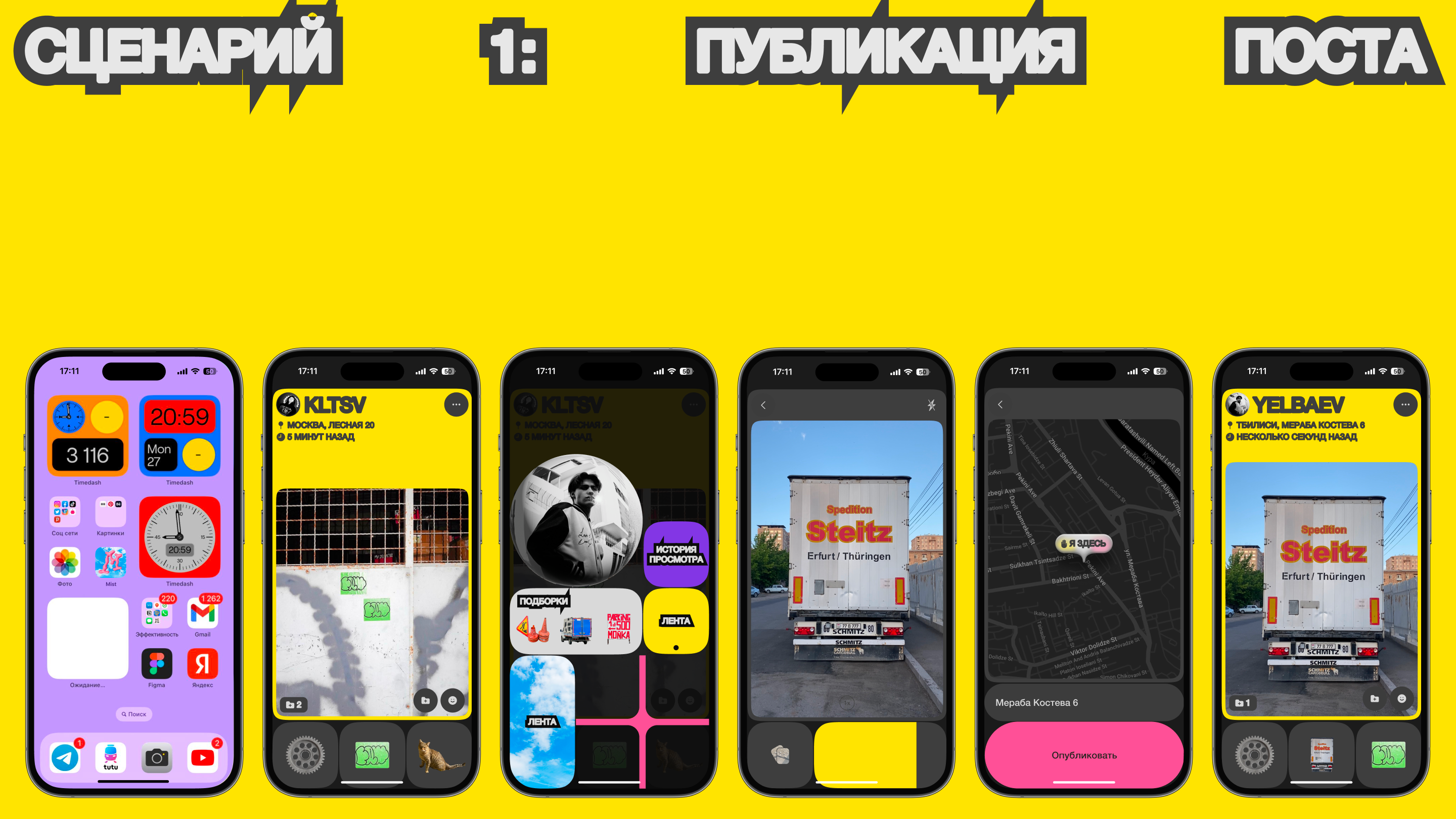
It's exactly the same in design. There were a couple of moments when I did a test assignment for Yandex. I made a huge flow – it was the first-day onboarding for an employee, a designer. And the team noted that it was a super empathetic approach: I literally lead the person by the hand, showing every step.
I realized that literally everything for me is about empathy. Every decision I make, everything I think – it goes through empathy. Either on one side, or on the other.
– Sasha Barabonova
How did you come into the profession?
When I first read this question, I remembered that at my diploma defense, in my parting words, I said: in "programming design" I'm super accidental.
Somewhere around ninth or tenth grade I was thinking about university. I came to an open day with my dad. Dad flips through the brochure and goes: "Oh, programming design, sounds promising." I originally wanted communication design, I looked at the pictures on the design program's page, and there were some laptops, serious stuff, programming. It didn't attract me at all.
Since childhood I'd always done drawing or something close to it. I grew up in Lobnya, a big town near Moscow. Zakhar, with whom I'm now doing our project, and I grew up there too, we became really close in the first year because I was like "I'm from Lobnya too," and he was like "wow, someone else, cool." Lobnya has a hundred thousand people and one art school, which I wanted to get into but didn't. My mom found a circle in applied design: they took IKEA plates and painted them – illustration, pattern. Alongside, a little color theory, a little composition.
Until ninth grade I was sure I'd apply to architecture. It seemed a logical continuation of all my interests. Then by chance on Instagram I came across a girl from the Baltics (I'm a big fan of the Baltic region, it just happened that way). She studied at HSE. I started following those who had just enrolled, in my 11th grade, and realized: that's it, I want only this place, nowhere else. And somehow everything came together quite by accident.
What keeps you in the profession now?
For the last two or three years I've been thinking that I want something different. Either I'm tired of moving things around in Figma and want to make something physical, or to change everything radically but still keep art in my life somehow. One way or another, it's present in my life: in clothes, in lifestyle, in hobbies.
So here it's probably habit and safety.
And also the desire to prove to myself that I can do even better, even cooler. All along the way I've been driven by perfectionist syndrome. I want it to be perfect; I know that if I want it, I'll achieve it, I'll get it. For the last six or seven years I've been like: "I want more, I'll do better, I'll show everyone, I'll prove it to everyone." That was a hard motivator.
Tell me about the people who shaped your vision.
It's not even projects – it's people.
The first person who shaped my desire to grow in design was Tanya Egoshina. All through 11th grade I went to HSE's preparatory courses. Sometimes Tanya would come to us, tell us something, show us something. I don't remember exactly how, but when I saw Tanya at work, I understood: I love it, I want to be like that.
In the first year we even managed to do some things together. She'd hand me some projects, sometimes I'd help her. For the first two or three years I really looked up to her – to her work, her style. That's why colorful work dominates for me, I even try to combine all the colors. In general I like all of it bright.
And at the same time I'm really about systems. Everyone who meets me is surprised – usually you have either systems or creativity. When they look at my portfolio, they say: "oh, it's like you're super creative." And I'm the opposite, I can't do anything without a system. Until I understand that everything is clear, studied, prioritized – I made a table, or a table of tables – it's hard for me to start.
So the second person is Vadim Bulgakov, our curator at HSE, who supervised for 23 years. In my first year I even got a tattoo, not exactly in his honor, but in honor of Vadim and the second year. Originally it was supposed to be a rabbit, but the rabbit was taken, so I have a bicycle. Not the most successful decision, though: if I move my arm, it turns from a circle into an oval. But it's remained my only tattoo. Vadim played that kind of role, it was through him that I understood the system: the approach to a task, the understanding of design.
And what about work experience?
They were different places – corporations, startups, studios. You just show up and learn individually.
In a corporation you understand how a big machine works: a bunch of people, and you're responsible for a small part. In a startup you can do whatever you want, but everything has to work fast, and you need really strong soft skills. In a studio you really make cool things, all together, it's fun. Each format has its upside.
The last two years have been very intense – I tried different formats. And over these two years I can say I understood everything. In design and in life. Because after each place I'd come out like: "oh, now I understand that I don't want to work there." Every project taught something, especially if the formats were different.
Tell me about practices and rituals.
I froze for about ten minutes when I first read this question. I started going through everything I have in my head.
A lot changed after university. When studying was the main focus, I thought only about it – I didn't care whether I'd eaten or not, slept or not. There was a goal and a result, and I was heading toward them.
Now it's looser, but the switch happened too abruptly. Now I wake up and don't want to do anything at all. I want a day off, I want to do nothing.
As for practices – a reference to university again. It was an hour and a half to two hours each way for me. I was afraid to work with a laptop on the metro and on commuter trains, so I looked at pictures on Pinterest. For an hour and a half you look at beautiful pictures – you recharge, absorb everything. You arrive, and you really want to take on something cool, because your brain has already processed it all.
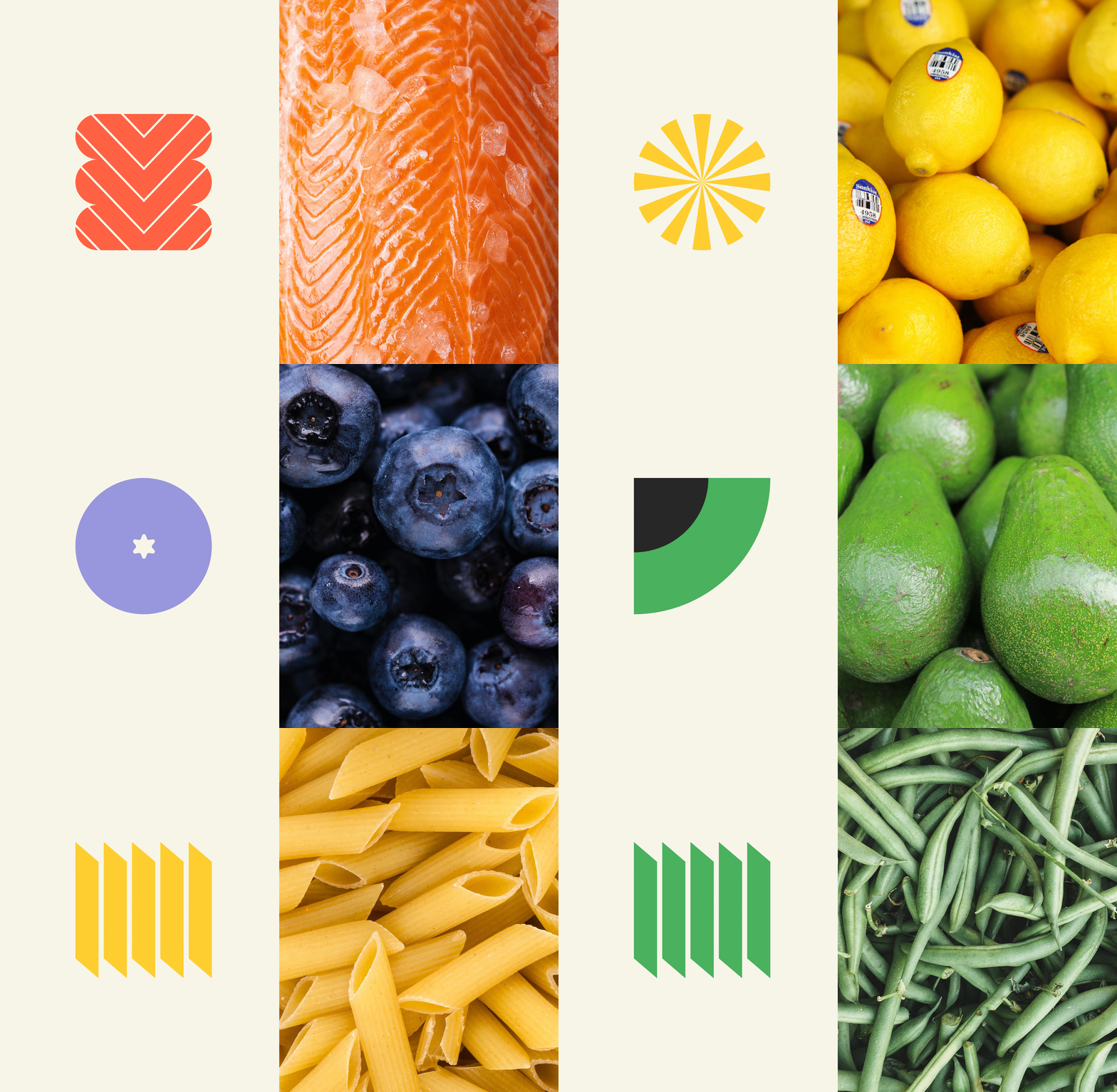
It's even my way of resting. After a hard day of meetings I can open Figma and Pinterest and just look at pictures, not think about anything. My head isn't working, I'm not worried about anything. I just look.
The nuance is that now few things please me, few things produce a "wow" effect. Preparing for our meeting, I remembered: the last time I had a real "wow" with a digital product was about a year and a half ago. I found a project by a really cool guy, he'd developed a full visual system for a web3 product. I studied it for about ten minutes. Apparently my standards are very high.
And also, I used to have a great memory. I could remember anything: I looked at a project three years ago – I remember the name, what it looks like, even the authors. At some point something clicked, and I suddenly started remembering badly. I go rock climbing, the coach sets a specific route with ten different holds. It used to be no trouble for me – I looked, remembered, I have visual memory. Now it's: "let's look a third time, a fourth time, explain it to me again, and I'll remember it." It's the same problem with images now – you look, and in a moment it's forgotten. Juggling them like before doesn't work anymore.
What comes first for you in a project?
For the first five years in design I strictly followed the product process – I go step by step, everything must be accounted for.
Then I landed in a startup. There they tell you: "You have one day, do whatever you want, you have to put together a landing page for us." The idea is to convey it through a landing page and get metrics growth.
In Birman's book on project management there's a framework, I think FFF (or not, I'm not sure – again a memory question). It talks about time, about quality, and something third. You'll always have to sacrifice something, you'll never fit all three.
When I worked at a studio, Zhenya Nirov and I spent literally two months making one landing page for Sami Gavrish. The task was to bring something new – to release it so that all designers in the Russian market would be blown away by what this could be. That a landing page is some new format. The goal there was more about visuals and idea.
In a startup it's the opposite, visuals are secondary. What matters is meeting the deadline and solving the task.
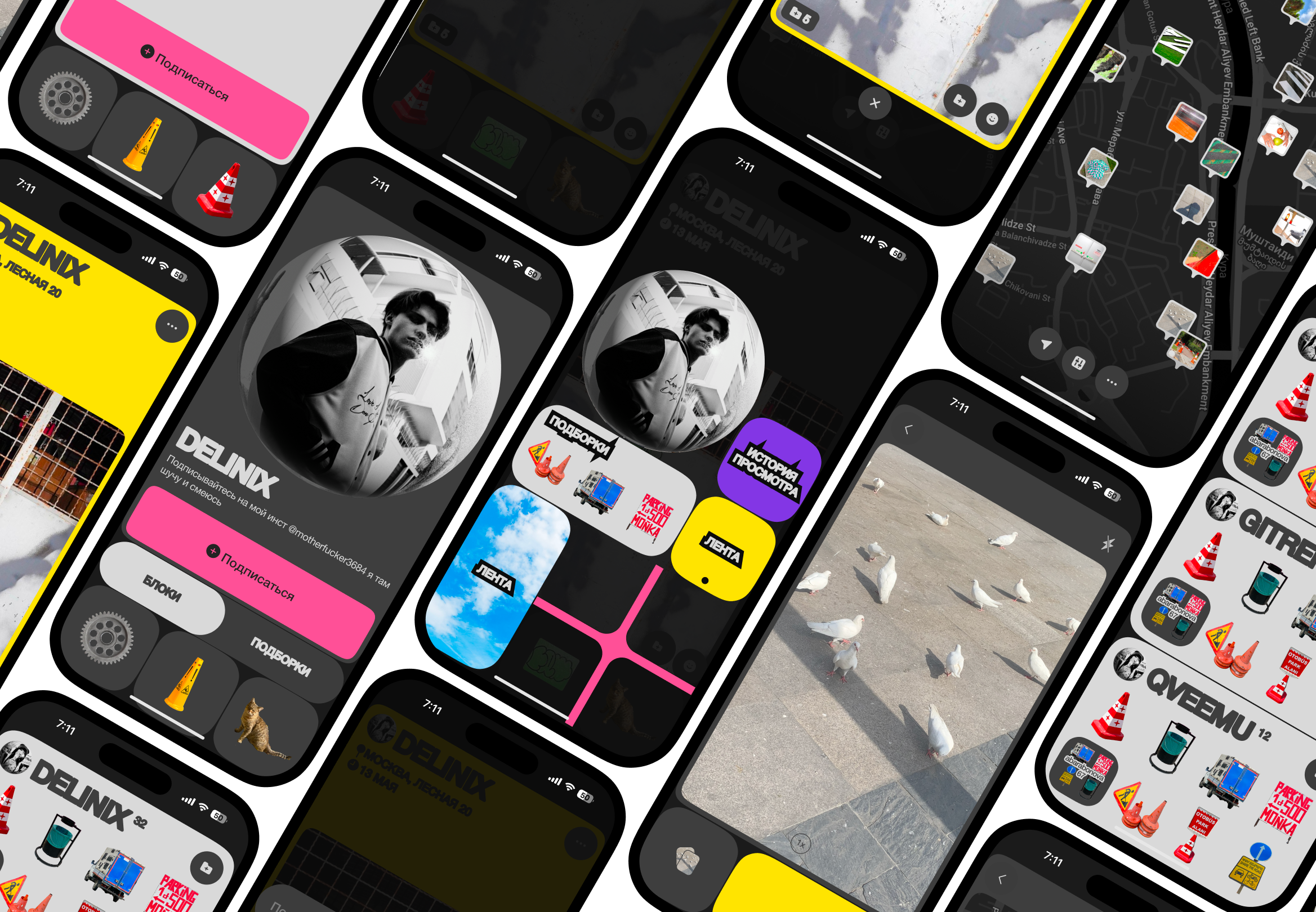
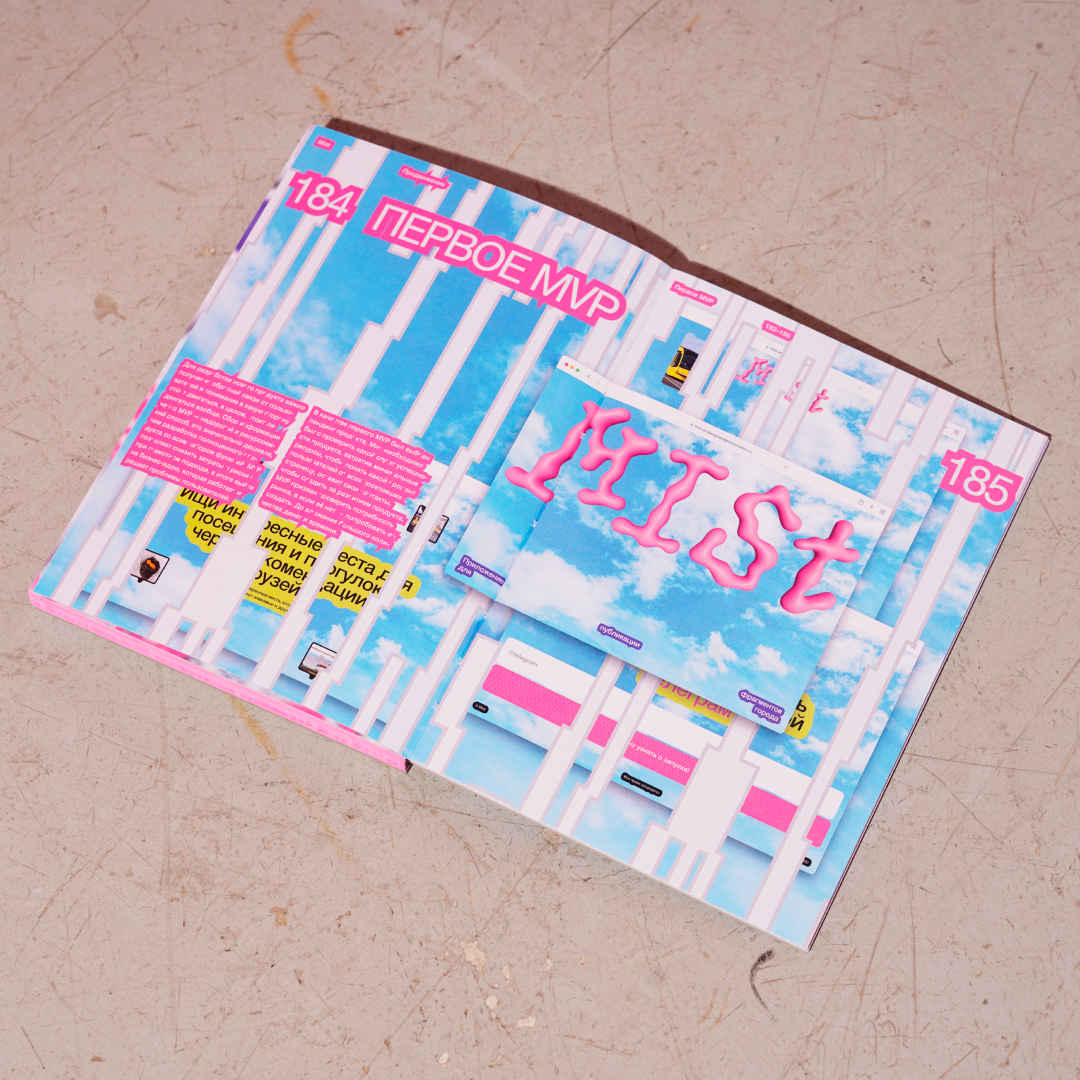
Now at Figital it's already juggling everything, and decisions based on whatever context there is. I can't single out one thing. In any product process I liked everything: research, finding the idea, visualization, finishing. In different formats. The main thing is to have a bit of everything, because when there's a lot of one thing, it turns into routine. And lately I find it hard to work with routine.
Teaching at HSE Yerevan – what was that like?
It's over now, it didn't work out – it lasted half a year.
HSE Yerevan is very different from HSE Moscow. If Moscow is about not sleeping, getting results, caring about your rating, the students there are quite the opposite. They're about hanging out and having a good time. Ratings don't matter. They just live their best life, go to classes, do something.
I came with the attitude: "now we'll work hard, make cool stuff." It turned out the students weren't about that at all. They like hanging out and studying it in a fun format, less tense than ours in Moscow. For the first few weeks it broke me, I didn't understand how it could be otherwise. And I started trying instead to get them interested – to instill interest in the project, because for them studying wasn't first.
It broke me especially because for me studying was first. I had no free time, I remember when I was first able to watch even 20 minutes of a cartoon, it was a big joy for me.
I taught second-year communication design students digital design – landing pages and a mobile app. The students had no familiarity with digital design at all, didn't understand what responsive is, how design works on a website. So my main task was to convey that it's not as hard as it seems.
I related it to what they already understood – branding, communication design. That in product design, as in communication design, there's a structure that things get layered on. There are basic rules: composition, color theory, typography – you learn them to understand how to work. Product design is exactly the same – there's a foundation you need to learn, and after that it's freer. The same format as a design system, just a different context.
Are craft and AI opposites or complements?
Over time I realized: I'm the type who's a bit afraid to try new things. If mine works – why do I need anything else.
When neural networks for image generation started appearing, they didn't grab me at all. I saw all those huge prompts in Midjourney, those big complicated requests. I thought: no, this is another era, like with code, I'll have to figure it out. I really didn't want to. I skipped it – I followed, saw what was happening, but didn't poke at it myself.
Then I landed at Figital, which does... Okay, you know. At first I had to make an effort to poke at all these networks, study the differences. They have super complicated names – Stable Diffusion XL, Stable Diffusion 3. You need to understand the difference, what can be combined with what – that's the essence of the product.
The first couple of months were really hard. I tried to correlate, understand, learn. In the process I got drawn in. I really liked it. We could go to other teams' demos – colleagues showed how to use the networks in work, how to combine them to get superb results. It became interesting, I started generating myself, experimenting. We became friends.
Even though before I rejected it and said: "no, I won't use artificial intelligence." ChatGPT – I've used it for more than three and a half years. Now daily, for work and beyond. Any question is no longer Google, no longer Yandex. It's ChatGPT.
Neural networks are a great tool that simplifies work the same way Photoshop once did. Before, I'd sit by hand, draw letters, print on a press. Then Photoshop came – making something became much faster. Now it's the same with neural networks. You don't go and organize a shoot, you just make a request, generate.
But it's important to combine AI and craft. A couple of weeks ago there was an announcement – some big brand heavily cut its budget and made an entire ad campaign only in a neural network. It looked very soulless and not quite appropriate. The goal was to deliver a product on a tight deadline. But in the end it didn't solve the task. It didn't evoke positive emotions. More negative ones.
In the near future we definitely need to balance both craft and handiwork. Maybe in a couple of years AI will learn to do all this at a professional level. But for now most of the work that impresses us is a combination and control. A kind of art direction over the network.
And also, about mass adoption. The boom among people was tied to ChatGPT getting image and video generation. I thought about it through the example of Wildberries product cards: two years ago, when generation had just appeared, not many people used it. And over the last year, literally any search – on the first and second page there will definitely be a card with an animated video or with generation. For me that's a flag: neural networks are becoming mainstream, even Wildberries cards respond.
It's also interesting that at the same time there's an opposite trend – OpenAI, Anthropic make their shoots and releases as craft-like as possible, and make a point of writing "no artificial intelligence was used in the process." "We're all for people, about people, and for the sake of people." It's interesting how this balances out and where we'll end up.