
Order out of chaos, metaphor in a mark, and turning down clients without values
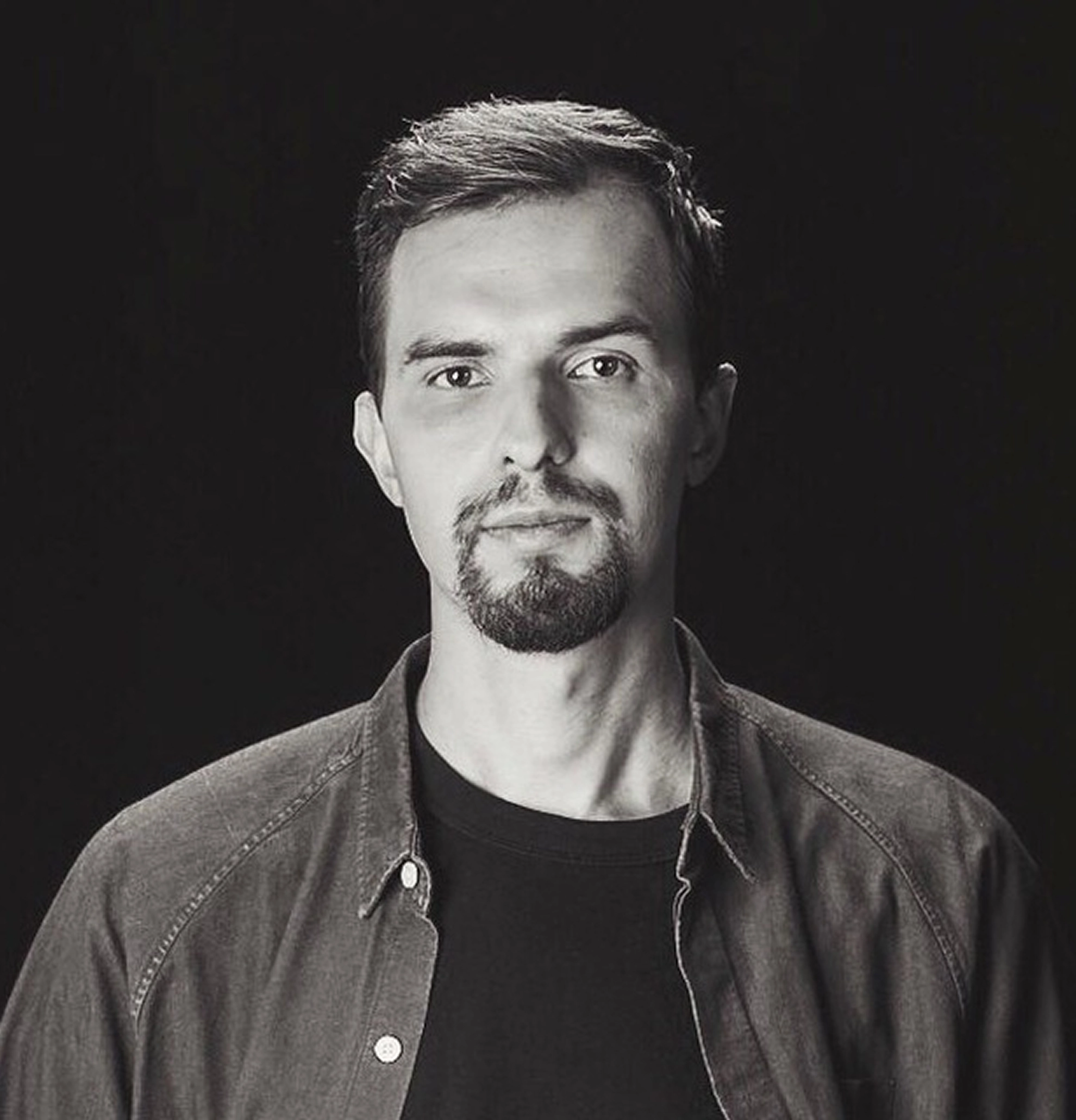
You say there's "design culture" and there's "culture of design." Are they the same thing or different?
I guess you can come at this topic from two sides. On one side, it's how design fits into culture at large – worldwide, or just locally. And of course, in all the time design has existed as a profession, a lot has changed and a lot hasn't, and that's great. I sincerely love it, from the moment I started learning about it and getting interested. Probably at the end of school, when I enrolled in a technical college and started getting a design education. I got drawn in gradually. Of course, it came through artistic practices, through art, art history, drawing. Not through engineering – everything through drawing and graphics. But graphic design always interested me most. The other areas of design, a bit less.
I understand it's a very broad, vast subject, a broad profession. And it all has a huge influence on our lives, and continues to. It's all very interesting, and I sincerely love it. So, from my personal position, what is it? On one hand it's about information, in a good sense. I've been doing this for a long time and I look at everything through some kind of design lens. Say, you come to a café and you assess the cuisine in the city, the urbanism, what's convenient, what isn't, what could be better. It's a constant desire to improve everything in the world, to make it more convenient. Design is for people, we're trying to make life better, or some business better. The urge to fix, to correct, to change for the better. Even when it's about beauty, making something visually more aesthetic, more attractive – that's also about improvement.
And it's also about the desire to make order out of chaos in a global sense. At this point in my development, I'm one of those designers, designer-Jedis, who try to bring some order. Even though I don't do infographics or urbanism or anything systematic. But I like it when something is crooked and askew and then somehow gets straightened out, improved. Some kind of systems thinking, global aesthetics, beauty.
And I like telling people about it: students and clients, just people. Sharing, explaining why this is beautiful and that isn't. How come?
I'm one of those Jedi designers who try to make order out of chaos.
– Stefan Lashko
Tell me about your path.
My path is pretty linear, maybe boring, but it was a conscious choice. I finished art school, went to a vocational college, got a design education. My first diploma says "design in graphics," but it was all about graphics, drawing, composition. I tried engraving, different techniques.
At some point I fell in love with different genres of posters – different schools of poster design. Europe, various designers. I was discovering all of it.
I enrolled at SHGD – the School of Graphic Design. I met great teachers and friends. That's where we finally formed our vision and became close with the guys with whom the studio would later begin. Already while studying, we shaped all of it, what we like and what we don't. We always liked doing something unlike everyone else, standing out, trying experiments. Some link between music and design or other arts. But the result could be just a sheet of paper, 70 by 100, with some graphics on it. What was on that sheet could be unusual, not average, maybe strange, maybe controversial. You set yourself tasks and solved them. Then you show it to others, they give you feedback – through an exhibition or a comment. And you make something again. And so on, basically forever.
At some point I met – we had a teacher, Ken Kagarov. He instilled a love of logos, of marks – of classic branding form. When you have to fit something very capacious, encode it into a small object, a small element. Through that I got to know the theme of metaphor, and I still like it very much. I think in metaphors and try to come up with them and realize them. For me that's the best part of graphic design.
So everything flows smoothly into branding, where you understand why it's needed, how it's sold, how it works. Other mechanisms kick in. But by and large, to simplify, there's always a metaphor, an image. You create it and make a nice wrapper for it.
I'm not self-taught – I have three degrees. At the same time, I'm not a fan of studying. There are people who love continuing education – that's not me. I always combined study and work. And it was always purely graphic, communication design.
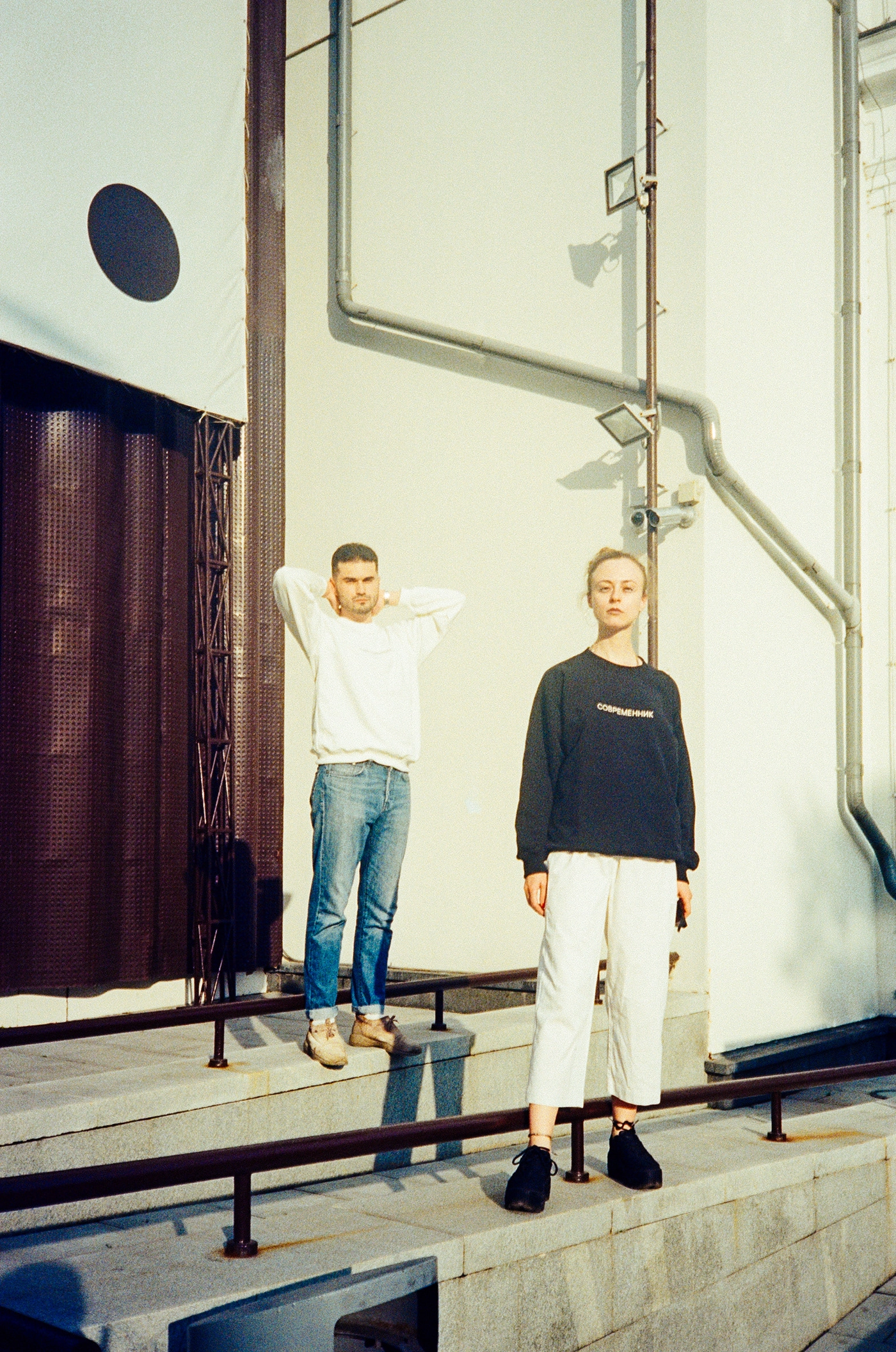
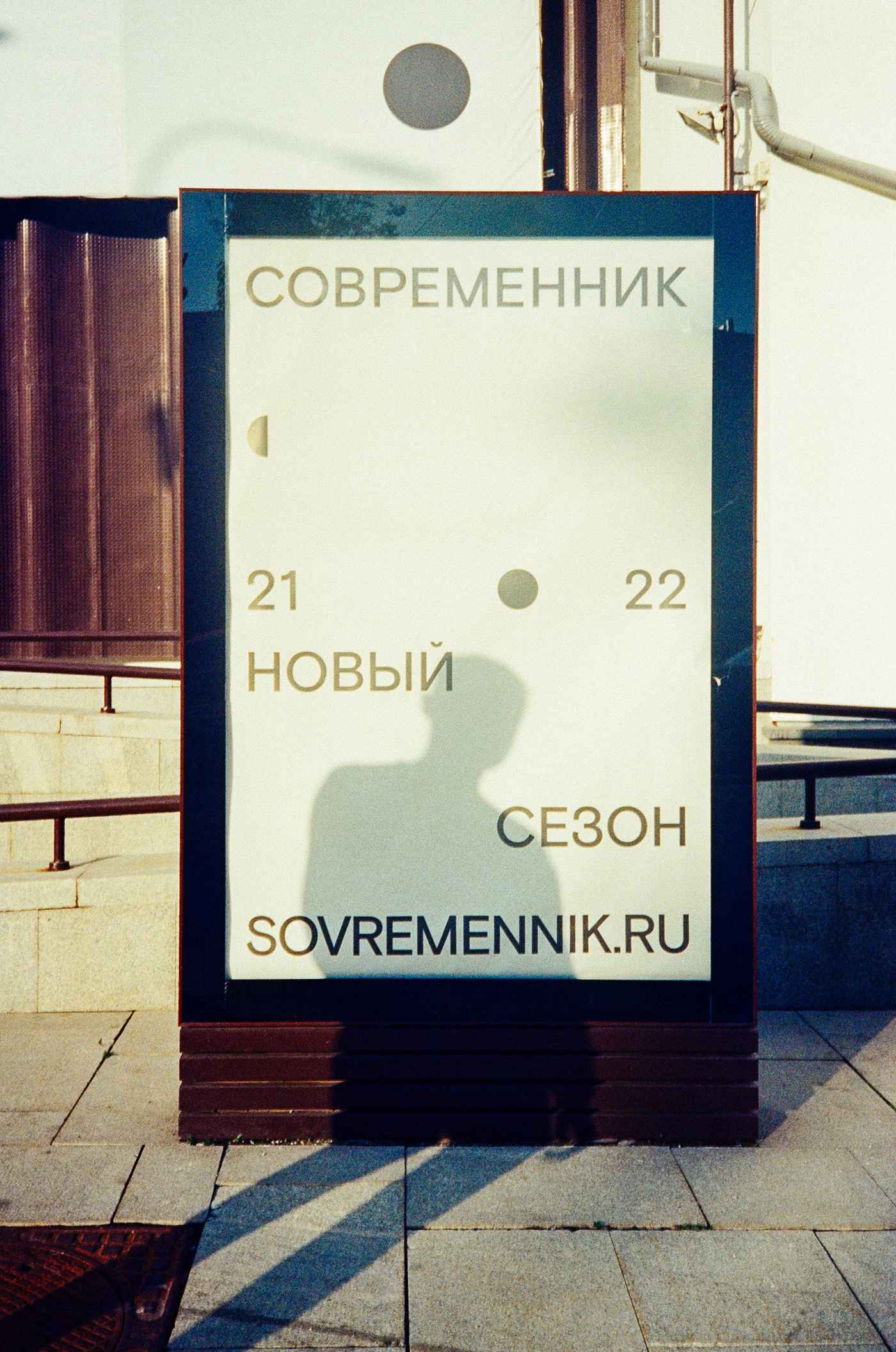
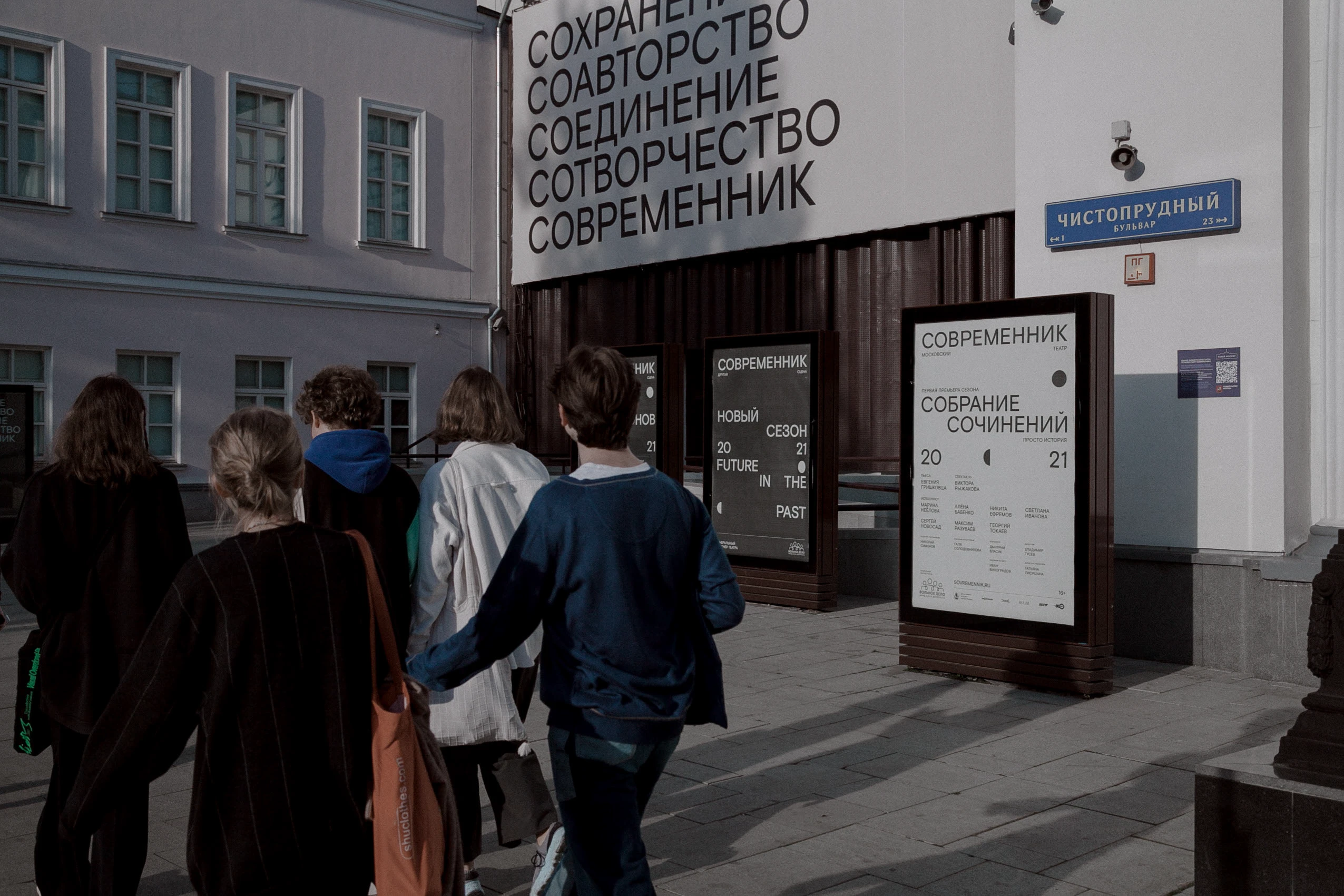
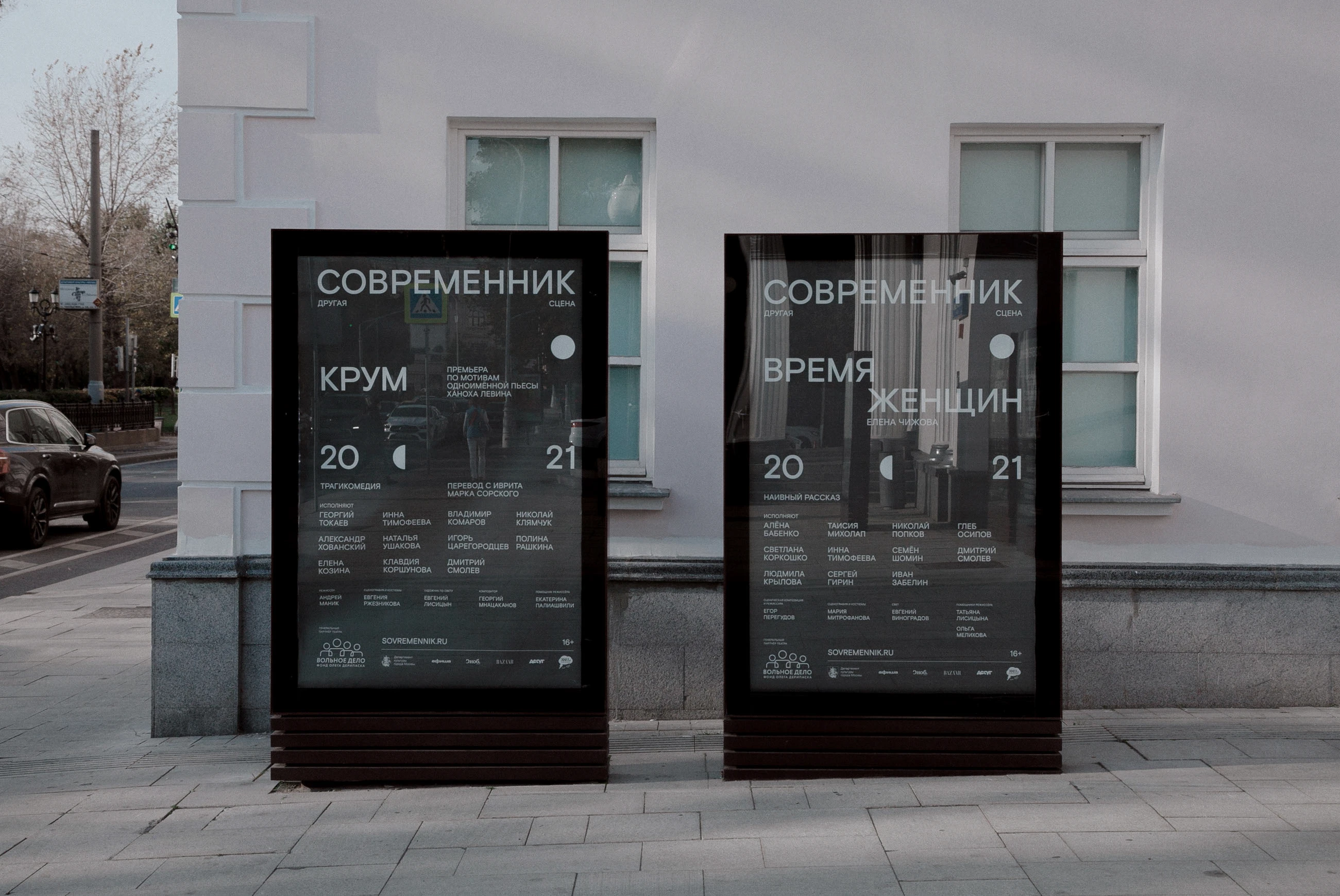
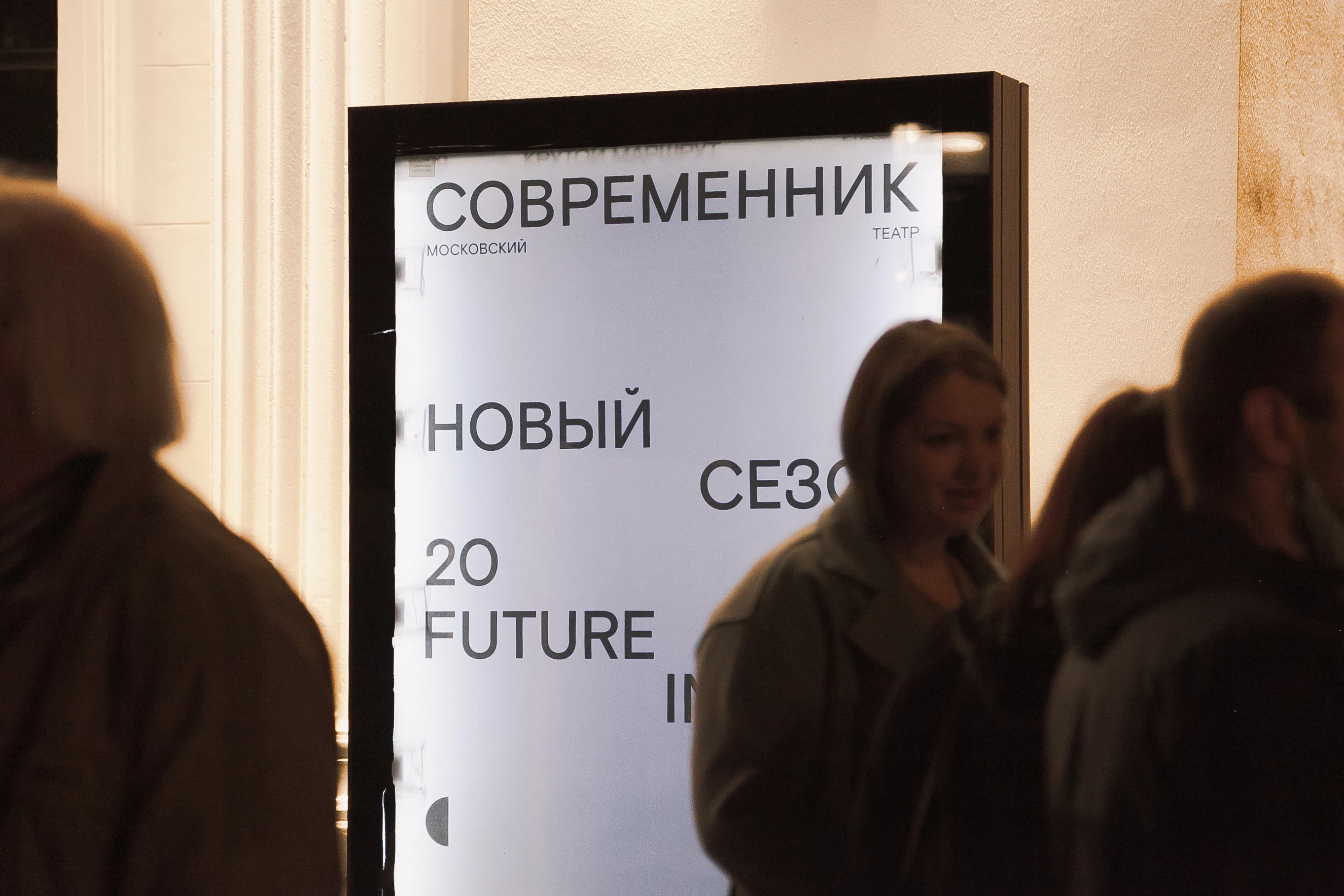
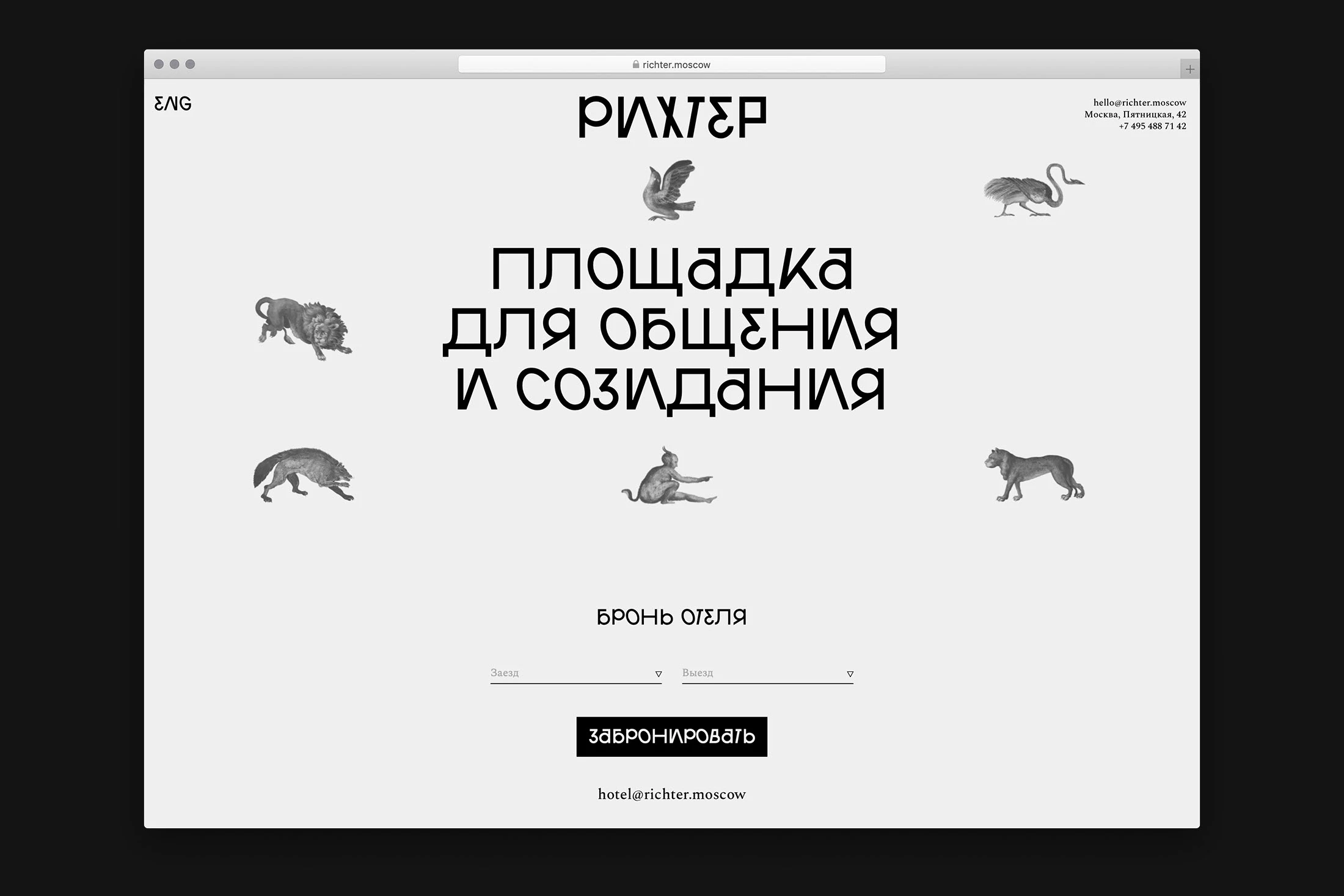
In your projects – from "Richter" to the most recent ones – everything is very expressive, very precise. Behind it there seems to be not only a desire to break the rules, but a knowledge of those rules.
Yeah, true. When you're studying, you don't realize it, you don't understand it, but then it settles somewhere and you come back to it. At the same time, we don't have any academic stiffness, any grind. Though it could be that way – we really do spend many hours on achieving what we're looking for in the graphics, in certain solutions. It doesn't always show.
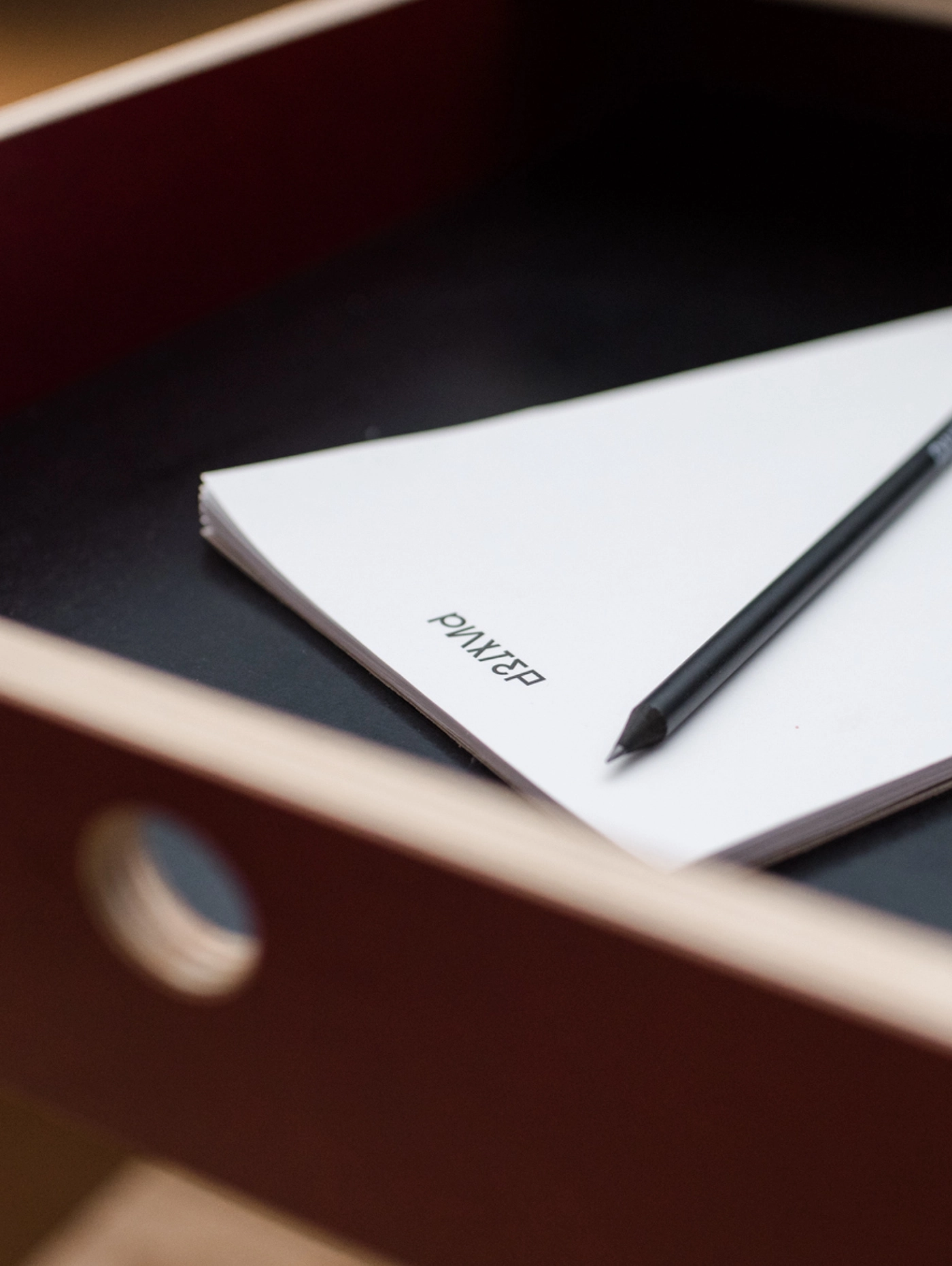
We always have a lot of sketches. A lot of hand-drawn sketches. Any project of ours always starts by hand in a notebook, then moves to digital. That approach is observed – you could call it conservative or classical. I instill that approach in my students too. Even if it seems easier to do everything on the computer right away – no. It's important that you scribble something by hand in a notebook.
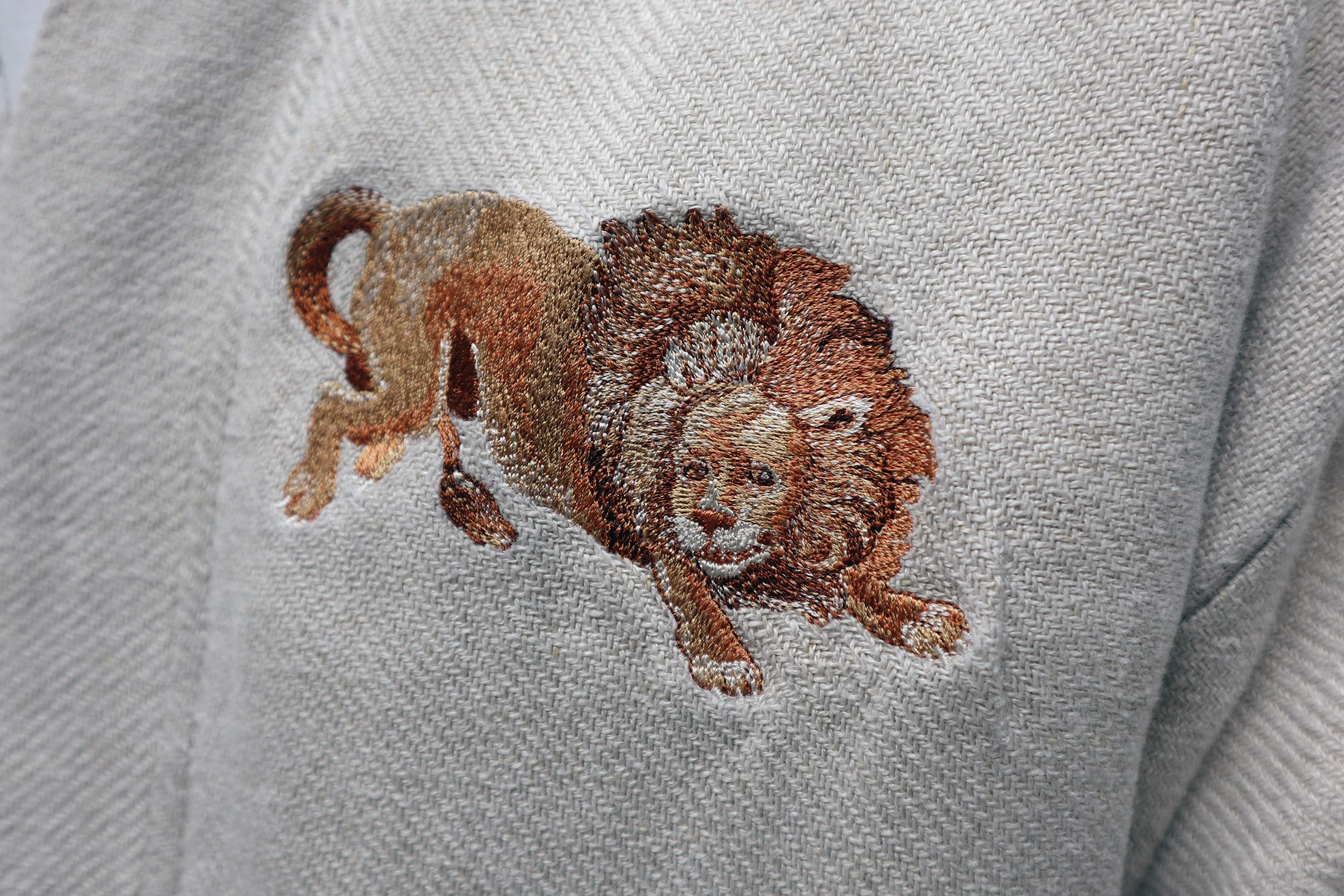
It affects the final result. As for "Richter," various factors came together there, different people, it was as if we'd been accumulating our energy, our experiments, and it so happened that on this project there was a chance to show all of it. To make something not for money, not only as a solution for a client, but a design piece as such. Design in its pure form.
And big thanks to the client: there was one hundred percent, even a hundred and ten percent trust and faith in the result. That's how it turned out. That's why it's so special.
Any project of ours always starts by hand in a notebook, then moves to digital. Even if it seems easier on the computer – no. It's important that you scribble something by hand.
– Stefan Lashko
What are your personal practices and rituals?
I'll split the answer into two parts. There are no meditation sessions here, no particularly secret knowledge.
When I start a project, it's always drawing on paper in a notebook. Ideas, jotting down thoughts, schematic images, searching for forms. Drawing out variants of thoughts, sketching them. It can take several hours or several days.
I like doing this in different locations. You change the picture, the location – maybe a city, a country, a café, a park. Different zones seem to have an influence. And it's all a pleasure. If you do it and enjoy it, that affects the result, it only gets better.
If you look at my specific works, they're all very simple. I like simplicity of form, cleanness – maybe it's that Scandinavian quality, which I really love. The simpler the form, the more meaning you can put into it. When I come up with a logo, I always try to make sure there's nothing superfluous in it – no decorativeness, only the essence, maximum meaning.
I get a kick out of showing a client a concept and having them start talking about it themselves, about the meanings they see that I didn't even put in or spell out. That means the result is achieved. A person who's seeing it for the first time talks about the meaning on their own. That's cool.
In the studio, though, the mechanisms may be set up differently. There's also a lot of handwork, a lot of searching for form, a lot of sketches – that's the first thing. The second is a lot of discussions, a lot of brainstorms.
On almost every project, we get together. There's a special stage inside: a brainstorm of the whole team and the working group, plus people who just join in. We warm up. We write down meanings, memes on the topic, pictures, references. Before handing the client a presentation, it's important to think and discuss a great deal.
More and more often now, we've started bringing the client into this. If they have a design team, or even non-designers, we storm together with them. In our studio we have a philosophy of co-creation – creating together with clients. We're trying to actively develop it. We see nothing but upsides. Although it takes a lot of time. It's not about direct earnings: it's easier to make something, sell it, get the money right away. Co-creation is more of a philosophical, or strategic, approach. We see global value in it. We feel more strongly what we're doing, that we're not working meaninglessly.
And one more thing, about trust. A banal thing. Reaching maximum trust on both sides: you trust and you're trusted. Then the work gets done simply. If that's not there, it's a lottery.
What do you consider quality in your team? How do you articulate it?
For us, quality is the default. Everyone on the team is experienced and doesn't accept anything low-quality. We definitely have that as founders, and the team does too. Clients come here for quality, even if they don't put it that way. We make a lot of premium or luxury-segment brands, not only that, but quality is one of the values there too.
On the other hand, we have a lot of visual experience. We form this concept internally, unspoken. It's not written down anywhere, what it consists of. But because we're such madmen – we love the profession more than money – inside we're ready to fight for beauty, quality, aesthetics. To endlessly discuss fonts, typography. That's perfectionism or, rather, caring.
And with that caring, we're ready to broadcast it to everyone, foaming at the mouth. We're not shy about saying it. After that, we don't care how people react. With clients who don't have a desire to make a quality project among their values, we try simply not to work. If it's really extreme – either they owe us a huge amount of money for it, or just a lot. We're basically not shy about refusing if our values don't match.
Here's how we position it: if the client's value is design, and design equals quality and aesthetics, that's our client. If it's just to tick a box in some report, to toss something onto someone's desk, not ours. We can afford to refuse. We're a small agency, more of a boutique. So: quality = value = design. Probably something like that.
If you grow a studio a lot, with each new person on staff this possibility drops a little: more people, more agreements, more compromises. In Europe, two-person studios are common. They have no compromises at all, they do whatever they want.
Quality = value = design. If a client doesn't have a desire to make a quality project among their values, we try simply not to work.
– Stefan Lashko
Because we're such madmen – we love the profession more than money – inside we're ready to fight for this beauty.
– Stefan Lashko


Is there a conflict between craft and technology?
I don't see a conflict. They're about different things.
The theme of craft, of searching for an expressive form through drawing – it was there and it's still there. There's no desire to give it up. It's part of our design process.
New tools have been added now. We use them too, like everyone. In some places they speed up the work, in others they help to quickly search for a solution or visualize options. And that's cool, because such a strong speed-up helps you share ideas faster with another person – a client or a colleague. Before, you had to spend a long time shaping an idea. Now you can do it in a second and discuss it.
But that's only about speed, about quick visualization of thoughts and sketches. In our work, AI doesn't replace the final result. We still spend just as much time on production – on motion, on type when we're designing it, on component layouts. On quality. As much as was spent, is still spent. The speed-up happened at the stage of searching for ideas and discussing them.
What I really like right now – recently this thing appeared, Figma Make. It's about a quick prototype: you can wrap an idea in it right away, drop in the brand identity. We're loving this tool. When we were studying, there was Processing – we were interested, but the barrier of code is high. There were guys who got hooked and now teach creative coding. And I'd fall asleep after five minutes – it's just not about code for me. With the new technology of vibe coding, like Figma Make, I can now do all this myself or with colleagues. A great thing.
But you have to have a vision to use these tools. There's an approach where you just toss in a prompt, it gives you something, and then you sit there justifying why you got that result. That's not for me. I'm more for checking an idea, speeding it up, testing it, and if the work takes off, great.
In our studio, for almost ten years, since the very beginning, a lab has run in parallel with client projects. Besides client tasks, we do a lot internally: experiments, discussions, not everything is shown. Some people like drawing, some like vibe coding – someone sits and just does that, then shares with the team. An endless process. It's building up mastery, when you spend many hours doing the same thing, the skill grows through craft. So AI is one more tool, like a pencil, only a different one.
AI is one more tool. Like a pencil, only a different one.
– Stefan Lashko